Showing posts with label location based services. Show all posts

Sunday, December 24, 2017

Geo-Graffiti reappears for Christmas

I do love it when people subvert technology and find a completely different use case for it. I first came across geo-graffiti back in 2005 when I attended the Freqout exhibition at the ICA. There were a selection of different exhibits created by young people who lived in and around the Ladbroke Grove Estate and engaged with the Vital Regeneration charity there. I wrote up my impressions of the evening here. My favourite exhibit that night was the geo-graffiti one.

Geo-Graffiti output from Battersea Park.
Freqout Exhibition, London 2005
"Geo-Graffiti - this was my favourite. Led by artists Jeremy Wood and programmer Hugh Pryor, kids went around with mobile GPS (global positioning systems) devices and traced their path on earth to create drawings. Back at base the 'drawings' were translated into a manageable size so that the likes of you and I can see them and make some sense of them. They started with creating simple shapes and then graduated to creating their signatures up to 400m wide at Battersea Park. Another project in this installation was to map the local area and mark the places most significant to them. In doing this, they created a map of the Churchill Gardens Estate including the best chip shop in the area. All good stuff." I've found an article here with some images of the output.

We're seeing more of this kind of thing now as mapping apps are more pervasive. And especially for the festive season, according to the Evening Standard, cyclist and Strava Artist, Anthony Hoyte, has created a giant snowman using the exercise and route sharing app, Strava. It took 10 hours to complete - that's pretty gruelling. One of the lovely things about it though is that it goes right through my local neighbourhood in South London! It's lovely to see that 12 years on, humans are making art out of whatever tools they have to hand. 


Day 24/25 Blogmas

Thursday, September 08, 2016

From the archives - It's Throw Back Thursday time again

So this time ten years ago, I was just back from my second visit to The Electric Picnic in Ireland. By all accounts, I'd had a fab time despite rain and the ensuing mud. My review of the weekend is here.

Location Based Services

Meanwhile, 10 years ago, DoCoMo was trialling in-mall location based marketing. It's weird that this was 6 years AFTER we'd done this at ZagMe and even weirder is that it was 10 years ago and we're only just beginning to see location based services (or proximity as it's known now) come to fruition. Brand Republic wrote a half decent piece on the potential of mobile for marketing and advertising. Remember, this is pre iPhone App Store days and Nokia was the best selling manufacturer by a country mile.

Branded TV Channels

In September 2006, Anheuser Busch announced they were setting up and investing US$30 million in their own TV channel for Budweiser drinkers called Bud.TV. 10 years ago, this was forward thinking and arguably, ahead of its time as it closed down in 2009 as they deemed it too expensive to sustain and the audience couldn't easily access it. Critics suggested that it closed down as the content wasn't relevant and limited in its appeal. More on the demise of Bud.TV and other branded content channels here.I would suggest that timing is key. Branded channels per se are not necessarily a bad idea. Look at the content that Red Bull comes up with that now hits mainstream TV. Bud.TV may just have been ahead of its time.

Design

Stephanie and Bryan Rieger are long-serving designers and mobilists. They are mavens of what works in mobile design and this presentation, 'Letting Go', from 5 years ago is well worth a look to remind you of what's what in mobile design. It's also a lesson in how to create beautiful presentations. 

But what about the children?

Throughout my time in mobile, there have been people thinking about how to use mobile devices to monitor and track where their kids are. They are generally a terrible idea - if a teen wants to escape your digital clutches, they are more than capable of doing that with or without the fancy tracker you've bought. I'm not really sure why they keep resurfacing. However, this one that friend and mobile ally, Carlo Longino, wrote about back in 2004 takes the biscuit name-wise. Read all about 'TeenArriveAlive.com' over on Mobhappy. It's a great takedown and well worth a read.

More from the archives soon!

Monday, August 29, 2016

Revisiting proximity marketing

I cut my teeth in mobile marketing in location-based services, or proximity marketing as it's now known, way back in 2000. I was Head of Customer Experience for a new outfit called ZagMe (now long gone) where we sent SMS text messages to customers at Lakeside and Bluewater shopping malls while they were out shopping. We were not only pioneers of mobile advertising, we were also pioneers of location based mobile advertising, and we were way ahead of our time.

Fast forward 16 years and proximity marketing is making the headlines again. Retailers are experimenting with geo-fencing, location based targeted advertising online and beacon-enabled apps. It has been a couple of years since I last took a good look at the sector. You can see the video here of the interview I did with David Murphy from Mobile Marketing Magazine talking about the history of location based services.

If you have an interest in this technology and its practical application, you my be interested at this upcoming Mediatel event, sponsored by Proxama, that I'm participating in on the morning of Monday 12th September in London. I'm looking forward to hearing about up to date case studies and I'm hoping brands and agencies have learned the lessons from the past. We'll see... 


And if you'd like a history lesson in how mobile proximity marketing began, here are a couple of videos from BBC News and Channel 5 explaining how ZagMe worked. 


Thursday, August 25, 2016

#TBT From the Archives - On this day in 2006

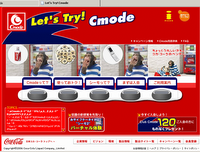
On this day in 2006, I wrote about Coca Cola embracing mobile marketing in Japan. That's 10 years ago! The gist of the service was that they could pay for Coca Cola in vending machines using an app that was NFC enabled or by using a personal QR code. They would then earn loyalty points for each purchase. To think we're only just seeing mobile payments here in the UK...

You can read the original post here.


Off hours mobile usage is covered in this short post from 10 years ago prompted by the Puzzler Media project Tom Hume was working on at the time. That is, usage of mobile devices at home in the wee hours of the morning rather than the received wisdom at the time of mobile being used mainly 'on the go'.

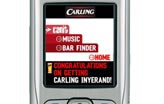
And the final one I'll share from the archives today is this one about Carling and a campaign they were running 10 years ago. There's a text in call to action and you get a wap link back (we are talking the days of Nokia N95 handsets and their ilk). Then there's a bar finder and a mobile game you can download and play. As a campaign mechanic, it's probably not that different from a lot of the campaigns we see today. The main difference is the call to action. Then it was SMS to WAP and now it's more likely to be a banner ad or social media triggering the download.

Saturday, August 02, 2014

A short history of proximity marketing

A couple of months back, I took part in Mobile Marketing Magazine’s Making Sense of Proximity Marketing event. Some of you reading this will know that I first got into mobile marketing by way of joining a start-up called ZagMe back in 2000, with Russell Buckley, where we sent promotional text messages to shoppers at Lakeside and Bluewater shopping malls (two of the largest malls in Europe at the time). In this video interview, I explain how ZagMe worked and what I learnt in the process and how it applies to our current world of proximity marketing.

If you’re interested to know more about ZagMe, what worked, what didn’t and best practice recommendations, download Russell’s free white paper here. It was written 10 years ago, but it’s still relevant.

There are also more videos from the event from some of the other speakers which include some useful case studies if you’re looking at implementing beacons, indoor GPS, local couponing or other location based initiatives, these videos may prove useful.

Monday, July 02, 2012

Yet another child tracking app is released

There have been so many child-locating tracking mobile apps and services in the last 10 years that I’ve lost count. Being able to keep tabs on your offspring by mobile device seems to pop up every few months when another company rehashes the idea and launches. And it worries me. It preys on the fear of parents. Children today are monitored at every step of the way. Compared with my own childhood in the 70s and 80s, they have little to no freedom. They barely play outdoors anymore. They don’t just hangout with other kids in the same street. They can’t get on their bikes in the morning in the school holidays and come back at dusk when they’re hungry without their parents wanting to know every last detail of where they are at what time.

I’m not taking the situation lightly. If instances of child molestation and paedophilia was higher than back then, well, I’d say, fair enough. Maybe we need to be more careful. But as one speaker mentioned at the recent child safety conference I went to, there has been no increase in either. The threat is not any greater than it was 10 or 20 years ago. And the threat hasn’t gone away either with the advent of molly-coddling our children or having apps to follow them around.

What has happened is that our fear of the crime – maybe all crimes – has gone up tremendously. We’re very much more aware of it. The NSPCC has done the most fantastic job of raising awareness and putting programmes in place to deal with it. And Childline is the most fantastic service. But seriously, do we really need to be checking up on our children day and night. The evil creatures that force themselves on children won’t be perturbed by a mobile device that can be throw away in a river never to be seen again. Just what are these services for and who actually uses them?

I’m not a parent myself, but I do have two nieces who I have seen grow up into mature, responsible, charming and intelligent young women. And I ran a brownie pack for almost 10 years so childcare and responsibility for children is something I do know about.

So what has prompted these thoughts? I received a press release from DondeEsta a few days ago and it has been bugging me. Here it is…

DondeEsta™ presents new functionality “I'm at home”

"I'm at home" is the new functionality of DondeEsta™ mobile application, whereby parents automatically will receive an e-mail each time their children arrive or leave home. Useful, easy and free.

Unlike other applications, DondeEsta™ is a service designed for families, focused on family safety needs. Parents who are at work, for example, can know at which time have their children got home when they leave school, without having to make any calls or send messages.

"I'm at home" is another of the free features of DondeEsta™, which also allows the location of the mobile anytime, anywhere by SMS. Parents can locate their children by sending an SMS with three question marks. The son's mobile answers automatically with a message that includes his location on a map.

Privacy respect is very important at DondeEsta™: Only authorized contacts can be located.

The application should be installed in the mobile to locate (the son for example), this one should be a Smartphone. Parents could have any kind of device that can send and receive SMS's.

DondeEsta™ is a geolocation mobile service for family safety developed by Counterpoint a start-up based in Sitges (Barcelona), founded by Pol Gerbeau.

clip_image002

o Web page of DondeEsta™: www.dondeesta.com

For what it’s worth, this is one of the smartest solutions I’ve seen so far for working out where someone is. It’s subtle and unobtrusive and it doesn’t rely on fancy apps. But it also doesn’t take away the need for parents and carers to have a good relationship with their children so that they are open and honest about where they’re going and who they’re with. Children need to learn about trust and responsibility too. And they need to be able to be released from the apron strings. Services like this don’t exactly help in those cases. Do we really want our 6 year-olds with a smartphone in their school bag every day to be nicked by the local school bully? That puts them at risk too. And what about the teenager who has two phones. One is where the teenager should be and the other is with the teenager doing what they shouldn’t. There will always be workarounds for those who don’t want to be tracked.

Where this *may* work better is when dealing with people who are suffering from dementia or Alzheimers. In the early stages at least, it’s likely they’ll have a phone on them and for them to work out where they are or to tell someone else where they are and to come and get them, could be a useful service. But even that is not without its difficulties… the subject needs to have their phone on them and it needs to be charged up with enough juice to work at all. Still not ideal.

Sadly I fear that services like these make everyone feel better in theory, but may make parents less vigilant about their relationships with their children, about teaching them responsibility and about good communication and equipping their children with the skills and tools they need to navigate the world – be that online or offline. It’s like the bike helmet issue. We never had bike helmets when I was growing up. I used to cycle a lot. And I was very careful. My parents made sure I knew how to ride a bike properly and understood the highway code. And I avoided roads with heavy traffic. If you wear a bike helmet, the tendency is to feel safer but pay less attention to the road. And have we seen a reduction in cycling accidents, I don’t think so. Drivers are more complacent and cyclists are more complacent as they’re ‘protected’. Neither of these scenarios is good. Just because we feel safer, doesn’t mean we actually are.

Anyone out there use one of these services and can defend its case? Am I barking up the wrong tree? Is this kind of app just waiting for its time to come and its time is now? I’m very interested to hear others views on this.

Monday, January 30, 2012

A short history of location-based services

I was invited to speak at Mobile Marketing Magazine’s mRetail Summit last week to talk about the history of location-based services. Some of you may or may not know that I spent my early career in fashion retail and then some years later in 2000, joined the mobile scene at ZagMe, where we sent text messages to shoppers at Lakeside and Bluewater shopping malls while people were actually out shopping. My retail experience certainly came in very handy there. Anyway, I was lucky enough to be, not only at the birth of mobile marketing, but also at the birth of mobile location-based services.

I’m not sure my slides will mean much without the dialogue, but they’re here if you want to take a look.

I suppose the key learnings for me from that time are

  • Customers wanted a permission-based offers channel for their local shopping mall
  • Once they’d signed up to the service, people assumed we knew where they were (we didn’t, we spoofed the location bit) and expected us to send them relevant messages
  • We were at least 10 years ahead of our time
  • It’s not about the technology, it’s about the application of technology. Understanding how to communicate with customers is essential. Understanding how retailers and retail staff operate is critical.
  • The ZagMe concept is still sound, but despite several services attempting to do something similar in the last 10 years, they’ve all failed. My guess is that it’s because they focussed on the technology and thought that retailers would change the way they do things to adapt to the technology rather than the other way around.
  • Location information is mostly useless without some context
  • Past behaviour is not a good predictor of future behaviour. A recent example to demonstrate this… I’m going to Barcelona next month. I searched extensively on Google to find my accommodation. Now the only ads I see are adverts for accommodation in Barcelona. If you really did understand my behaviour, you’d know that the time to serve me those ads is in December and early January. By the end of January it’s too late. But behaviour predictors don’t have that level of granularity. But I guess that conversation is for another day.

Friday, June 03, 2011

NN4D–NAVTEQ Developer Day–London 8 June

In my capacity as co-organiser of navteq logoMobile Monday London , I thought it might be worth telling you about an event we’re supporting. It’s NN4D with their upcoming developer day on 8 June in London. It’s free to attend, but registration is required: http://www.nn4d.com/site/global/market/developerday/p_devday.jsp/. This is a unique opportunity and the first time the NN4D team have brought developer days to Europe. They’ve just had a great developer day with Mobile Monday Tel Aviv so let’s make sure this is a great one too.

The reason why I think you might be interested is because there are genuine business opportunities by working with NAVTEQ and the people who make the decisions will be there on Wednesday. If location (and we’re not just talking mapping here) is part of what you do, then these are the people to talk to with their enormous channel partner network, access to the right people at the right time and help with the technical details, marketing, distribution and more, this is a good opportunity to make friends and make a difference to your business. That’s why I’m going. Oh, and there will be plenty of technical sessions too if that’s what you’re after.

Why come?

  • Learn directly from NAVTEQ and our partners Nokia, Samsung, Orange, Blue Via, deCarta and more about their map data and partner APIs to quickly apply your skills to create the most compelling location-based mobile apps
  • Listen to developers share their lessons learned
  • Explore augmented reality and next-generation technologies for location-based 3D apps and games
  • Learn about free technical support, free marketing support and free business development opportunities to meet global channel partners (this is the most interesting bit for me – the opportunities are very real and are there for the asking and can make a real difference to your business)
  • Network with peers, meet experts and discover how to get your app in front of potential customers and industry influencers
  • Participate in a Lucky Draw to win an iPad and other prizes and giveaways

Learn about the latest developments and innovation in location through case studies, interactive panel discussions and unique networking opportunities. Meet the people who matter both on the business side and the technical side. They will be out in force to help you.

Find out what the global opportunity is for location-based applications and how NAVTEQ data can help you differentiate your applications. Discover how the NAVTEQ Network for Developers (NN4D) can assist you every step of the way, from building your app straight through to business development and marketing and help you meet global channel partners. And all this is offered free. They will never ask for a penny from you in fees or in revenue share. Ever.

The technical portions of the day focus on APIs and SDKs that enable both mainstream location-based apps and services, and next-generation technologies for location-based 3D apps and games.Learn how to get started creating location enabled mobile apps from partners, such as Nokia, Samsung and deCarta who will introduce you to their APIs.

The day is suitable for both business people making decisions about mobile apps and services and how they can be distributed and marketed and also developers and coders who need to know more about the nitty gritty of the technical detail.  The full agenda is here: http://www.nn4d.com/site/global/market/developerday/agenda2/p_agenda2.jsp

Where is it?

Dexter House, 2 Royal Mint Court, Tower Hill, London EC3N 4QN  – nearest tube is Tower Hill map.

The event is co-located with Mobile Apps World and there are discounts available to attend that if you wish.

When is it?

Wednesday 8 June 2011 – registration opens at 8.30am and the day will finish around 5.30pm.

RSVP

The NAVTEQ® Developer Day is free of charge but you must pre-register. Please RSVP here:  http://www.nn4d.com/site/global/market/developerday/p_devday.jsp

See you there next week!

Thursday, July 31, 2008

Location Based Services - are they all missing the point?

I recently attended MoMo London's recent event on location based services. It was a great event, with speakers from Google Gears, Yahoo! Fireeagle, Skyhook Wireless (who were our generous sponsors and fantastic hosts), W3C, Locatrix, Rummble and Buddyping. We also had a fair number of MoMo folks in from chapters from other countries (USA, Spain, Sweden, Estonia, Germany and Australia) plus 200 or so of our London members so it was a very good crowd. And lots of people wrote nice things about the event too which is great as it means as organisers (I'm one of the London organisers), we're doing something right.

And all the companies are doing interesting and clever things with location on mobile. However, I can't help thinking that many of the LBS initiatives are missing the point, or at least the initiatives discussed on the night seemed to missing the point as they all seem to be focussed around mobile social networking and mapping allowing me to find my buddies or things to do close by, unless I missed something.

If I see another googlemaps mashup with virtual map pins on it, I think I'll scream! How many of these maps do we need to see? And why do we need to see a map most of the time anyway? It's pretty enough, but usually pretty unnecessary. And what has physical location got to do with it. Twitter has no location API, yet it's actually very effective for letting me connect with people who are local to me (and to organise meeting up via tweet-outs such as 'I'm in Soho this afternoon, anyone want to hook up for coffee) as well as helping me have relationships with friends and colleagues further away. There are no maps involved. No location look-ups.

Don't get me wrong, I love googlemaps - especially on my mobile. It's incredibly useful and means I don't have to carry a London AtoZ with me any more and it means I get less lost when travelling in cities I'm not familiar with. But the mapping element isn't the be-all and end-all when it comes to location. In fact, it's barely even the start.

You see, it's all about context. And it's all about the customer being lazy (there's a limit to how many UGC sites I can contribute to and a limit to how many times I can add the same information/review/postcode/picture/whatever to multiple sites and I'm a pretty avid contributor to these things. And anyway, how is the location, per se, relevant. If I want to know where the nearest McDonald's is I can usually see it on whatever High Street I'm standing on anyway or I could ask somebody. And when I've tried using recommendation sites for finding out the best late night restaurant or club in London's West End, I've found them pretty useless on my mobile and have resorted, successfully, to using Texperts instead.

So what do I mean about context. Context is understanding that it's not that I'm on Oxford Street, London W1. But that it's Saturday afternoon, Oxford Street is a busy shopping street, I don't work near there so the chances are I'm probably out shopping. An advertiser of the latest thing in trainers is interested in targeting shoppers who are in the shopping frame of mind and in or near a shopping location, and maybe even that their propensity to buy trainers is medium to high, not the actual postcode. No amount of map pins is going to solve that problem. And being able to reach 1000 people on Oxford Street is no where near as attractive as targeting 1m UK shoppers while they're out shopping across the UK. If you're a big brand, and let's face it, it's the big brands who have the big advertising budgets, you want national coverage which can complement what you're doing on TV, radio and outdoor.

What I'm not seeing are intelligent ways of collating and managing this information to make it relevant, interesting or useful for the customer, or making it easy to buy the media and reach for the advertiser or media buying agency.

Unless there's someone out there already doing this... in which case, I'd love to know about it!