Showing posts with label mobile social networks. Show all posts

Saturday, December 16, 2017

It was my 11th Twitter birthday yesterday

I've been a member since 15th December 2006. Eleven years. I was one of the early adopters in the UK. This is how it happened.

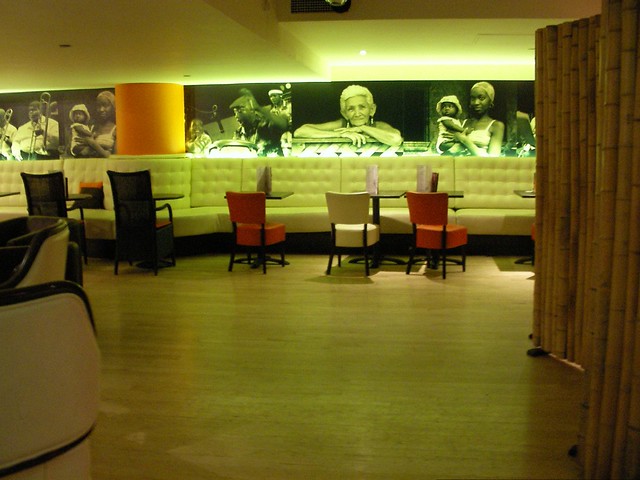
Downstairs back wall
The calm before the storm
London Tech Christmas Party December 2006
I was part of the London Tech community's Christmas 'Mega Bash' of 2006 led by Ian Forrester of BBC Backstage. The idea was to get all the London tech community groups together and to have a big Christmas bash on Saturday 9 December 2006. Swedish Beers was one of the groups involved alongside London Girl Geekdinners, Geekdinners, London Perlmongers, London Webstandards Group, London Ruby user group, Open rights group, London 2.0, Mobile Monday, LondonSEO. Of those, Swedish Beers is definitely still going strong with no sign of letting up any time soon (I hope).

The sponsors on the night fared better. Trusted Places went to Yell. SkillsMatter, Chinwag, TechCrunch UK, and O'Reilly are all still around in one form or another. AdMob sold to Google for megabucks. And Connect Me Anywhere was the precursor to Iovox.

Twitter didn't quite make the grade as a full-on sponsor, but they were involved in some way. It's a long time ago. I can't remember the detail. There was some Twitter activity that night, but I hadn't been organised enough to sign up to the service. And in all honesty, I really couldn't see the point of micro-blogging. I'd been doing long-form blogging for 3 years at that point and I'd been an active member of Flickr since 2005 and even had a PRO account so I could store more photos. That was my social network of choice at the time. We used that and Moblog a bit like Instagram is used now except we took our photos on our mobile or cameras and uploaded via desktop or laptop computer.  My business networking was done on Soflow, Ecademy and LinkedIn. So I could see the point of social networking (although we didn't call it that then), but microblogging? Yeah, wasn't so sure on that one.


I took some nudging from Ian to get signed up to Twitter. I did it as a favour to him after the party to help him meet his obligations to Twitter. And in those early days, I really couldn't see the point so I wasn't particularly active. And my first tweets don't reveal very much of note either. Also at the time, Twitter wasn't market leader. We also had Jaiku and Pownce. Jaiku has more functionality. I seem to remember Pownce having some weird USP that I can't quite remember, but they were both also about micro-blogging.

Fast forward to February 2007, and it's 3GSM in Barcelona - what is now Mobile World Congress. Twitter is integrated with SMS and you could do things like create an interest group and everyone in the group would receive the messages via SMS. You could post and receive via SMS for free as well. In Barcelona, on roaming, and many of us on the same mission to find out where the action was at 3GSM, Twitter suddenly had a purpose. The most similar thing to that now would be a WhatsApp or WeChat Group. Now I got the point. We could share messages with each other easily and for free. We could find out about what was going on and get answers to questions. All useful stuff. And now, all superseded by other services.

It's fair to say that for a few years I was an enthusiastic Twitter user. I met many people via Twitter. Engaged in the offline Twitter meet-ups and I met new clients via Twitter as well. It was still small enough that you could keep track of the people you were following and in turn, you could be found and make an impression. Most people still couldn't see the point of it so it stayed in the category of quality not quantity in those days.

But as the masses joined in, the usefulness and relevance for me decreased. And for the last few years, I've hardly used it at all. Facebook and LinkedIn have taken over in usefulness and reach for me - particularly the former, even for business-related content.

But, I'm still there and I'm using it a bit more again since I picked up the blogging pace this November. It's harder work because of the volume of stuff to wade through. And I'm not sure how much reach I get from Twitter. My blog stats say Google and Facebook are my main drivers of traffic with Twitter barely showing a blip these days. But maybe that will change now that I'm a bit more engaged. These platforms have a way of ebbing and flowing over time. And maybe now that Twitter is not quite as micro-blogging as before, it will make a difference.

If you'd like to relive that London Tech Mega Christmas Bash 2006, you can do that here. And if you're feeling brave, you can check out the photos. We certainly look younger, but so many of the photos are deeply, deeply unflattering!

Day 16/25 Blogmas

Monday, November 20, 2017

Online privacy, a battle that can't be won?

The party I went to at the weekend was interesting from a sociological point of view. Inevitably when at these kinds of things, I spent some time people watching and part of that was spent observing their mobile habits. Everyone had phones, even a lot of the children

The good thing was that people didn't seem to be using them too obviously and conversation was the order of the evening. There was a seated area outside the main room and that seemed to end up being the 'taking a break from the party and checking my phone' space. Every time I walked past, there were 2 or 3 people checking their phones. It was interesting that these people had chosen to step away from the party in order to do that. Is that a new social etiquette? I did it too. I stepped outside for a few minutes to call my Mum although I didn't succumb to browsing my social feeds for once.

The other habit worth noting was the lack of people taking photographs. Hardly anyone took any photos with their phone at all. I didn't take any either. I think much of that was down to the types of people who were there. They were mostly parents of children under 12. As such, I think they will have had so many letters from headteachers about not taking photographs at school events that they've stopped taking photos when children are around for fear of inadvertently taking a photo of a child without permission. I missed a cracker of a shot of a group of the children with their backs to me at the bar. I was very close to taking the picture but because they were all under 10, and even though you couldn't see their faces, I kept my phone in my bag and didn't take the picture.

I think it's right to be mindful of other people's privacy and I do try to do that but it's not always easy. But sometimes the big companies we use daily make that hard. Their growth hacking often relies on us sharing our lists of contacts with them so that services like Facebook and LinkedIn can join the dots to connect us with people we know. I, like many others, have learned the hard way, not to do that. Most of us have clicked something that triggered or nearly triggered a mass email to all the contacts on our address book.

I thought I'd turned off all of those contact book sync settings in the apps and online services I use. However, on checking, I did find some very old contacts on my Facebook sync which I have since removed. I was prompted to do this following a post from Techhub's Elizabeth Varley. Here are the instructions to check yourself.
Did you ever upload your phone contacts to Facebook? Can't remember and want to check? You may want to delete them all. You can find out if you've uploaded contacts here: https://m.facebook.com/invite/history/ .
None of this will delete any of your contacts as being Facebook friends, don't worry.
If you're doing this on desktop, use https://www.facebook.com/invite_history.php
Make sure to click on the messenger contacts too and delete those. I didn't think I'd uploaded any to Facebook, but had clearly slipped up ages ago and didn't realise some old contacts were still lurking there.
These uploaded contacts are one of the ways that Facebook does the "people you may know" thing.
If you're wondering why this might be an issue, here's a very good article about how Facebook uses data to figure out everyone you've ever met.

I don't know if we'll ever win the battle for online privacy. We can but try.

Day 19/30 NaBloPoMo (yes, I'm still behind but aim to catch up today!)

Monday, August 04, 2008

Ever wanted to know the gender and age breakdown of social networks?

Then Rapleaf has answered your prayers. They've just released the full dataset of the 49.3 million people included in the Study of Social Network Users vs Age. It covers the main online social networks including Bebo, Facebook, Myspace, Hi5, LinkedIn, Flickr and more.

Overall, it appears that women are significantly more active on social networks than men as they're more interested in nurturing relationships (confirmed by higher membership on sites like MySpace, Bebo and Facebook. Men on the other hand are more interested in transacting and therefore have a higher representation on LinkedIn (I wonder if that also exposes the gender gap in the workplace at executive level?)
Rapleaf tell us: "women spend more time on social networks building and
nurturing relationships, whereas men are less likely to spend as much time
nurturing relationships as they are 'transacting'."

The missing link in this study is of course the mobile element. None of the mobile social networks are included such as Mxit, Trutap or Peperonity. We also know that online social networks such as Facebook going mobile drives mobile data usage. My question is does that mean *women* will be driving the mobile data revolution (as they seem to be driving the online social networking revolution)? And if so, how are we tailoring mobile data services and the marketing thereof to women. In the UK at least, network operator advertising feels either masculine or gender neutral. It certainly doesn't feel very feminine to me (and I'm not talking about the expectation of seeing pink and pastel colours).

And if my hunch *is* right, then shouldn't we be designing this stuff with women in mind first if we really want to drive mobile data services forward? And if so shouldn't women have more of a voice in making decisions about their digital lives - be they on the mobile internet or the fixed line internet?

[gets off soapbox!]

Monday, May 12, 2008

Big growth predicted for Mobile Social Networking

eMarketer forecasts that mobile social networking will grow from 82 million users in 2007 to over 800 million worldwide by 2012. As you can see from the image below, the millions of subscribers are a small percentage seeing as we've already hit 3 billion subscribers globally. But the potential for growth is clear. And early findings suggest a strong customer demand for mobile social networks. This doesn't surprise me in the least as mobile is all about *communication* and *community* and social networks fulfil both those needs so tying in with mobile makes perfect sense.


As discussed at the recent Mobile Youth Workout, we already know that mobile social networking is driving data usage on mobile. Typically, Japanese youth are spending 2 hours a day on the mobile internet - largely for social networking (on sites like Mixi). And with the general growth of facebook, myspace, linkedin, twitter et al, including a big chunk of that on mobile, this growth doesn't seem far-fetched.

"For example, MySpace recorded over 7 million unique visitors to MySpace
Mobile in the US in the six months since launch. "It wasn't until we rolled out
m.myspace.com that we got a sense of how powerful demand was for MySpace on cell phones," Brandon Lucas, senior director of mobile business development for
MySpace, told eMarketer.

Facebook claimed 4 million unique registrations. Mobile-only social networking players such as airG, Mocospace, myGamma and itsmy.com all reported several million users soon after launch."

And there are more mobile socnets than that - Peperonity with over half a million home pages representing a fraction of its customer base, and Mxit immediately spring to mind, not to mention Cyworld (SK Telecom-owned and now available in the US as well as Asia) and Mobikade and Trutap in the UK.

If mobile social networking is your bag, or where you think your bag should be, then emarketer's new (paid for) report on the topic may well be worth a read.