Showing posts with label flickr. Show all posts

Saturday, December 16, 2017

It was my 11th Twitter birthday yesterday

I've been a member since 15th December 2006. Eleven years. I was one of the early adopters in the UK. This is how it happened.

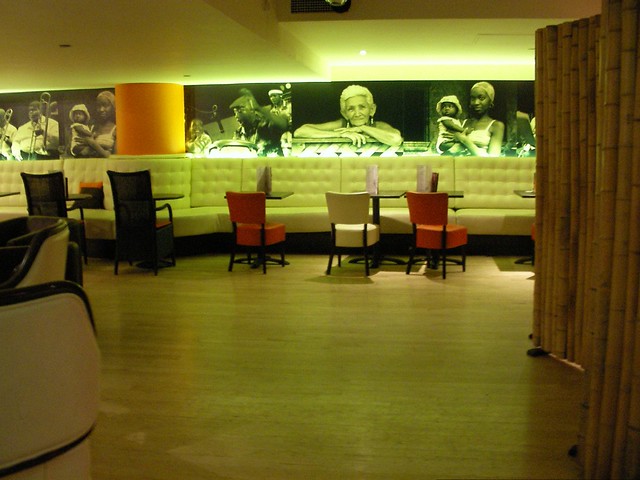
Downstairs back wall
The calm before the storm
London Tech Christmas Party December 2006
I was part of the London Tech community's Christmas 'Mega Bash' of 2006 led by Ian Forrester of BBC Backstage. The idea was to get all the London tech community groups together and to have a big Christmas bash on Saturday 9 December 2006. Swedish Beers was one of the groups involved alongside London Girl Geekdinners, Geekdinners, London Perlmongers, London Webstandards Group, London Ruby user group, Open rights group, London 2.0, Mobile Monday, LondonSEO. Of those, Swedish Beers is definitely still going strong with no sign of letting up any time soon (I hope).

The sponsors on the night fared better. Trusted Places went to Yell. SkillsMatter, Chinwag, TechCrunch UK, and O'Reilly are all still around in one form or another. AdMob sold to Google for megabucks. And Connect Me Anywhere was the precursor to Iovox.

Twitter didn't quite make the grade as a full-on sponsor, but they were involved in some way. It's a long time ago. I can't remember the detail. There was some Twitter activity that night, but I hadn't been organised enough to sign up to the service. And in all honesty, I really couldn't see the point of micro-blogging. I'd been doing long-form blogging for 3 years at that point and I'd been an active member of Flickr since 2005 and even had a PRO account so I could store more photos. That was my social network of choice at the time. We used that and Moblog a bit like Instagram is used now except we took our photos on our mobile or cameras and uploaded via desktop or laptop computer.  My business networking was done on Soflow, Ecademy and LinkedIn. So I could see the point of social networking (although we didn't call it that then), but microblogging? Yeah, wasn't so sure on that one.


I took some nudging from Ian to get signed up to Twitter. I did it as a favour to him after the party to help him meet his obligations to Twitter. And in those early days, I really couldn't see the point so I wasn't particularly active. And my first tweets don't reveal very much of note either. Also at the time, Twitter wasn't market leader. We also had Jaiku and Pownce. Jaiku has more functionality. I seem to remember Pownce having some weird USP that I can't quite remember, but they were both also about micro-blogging.

Fast forward to February 2007, and it's 3GSM in Barcelona - what is now Mobile World Congress. Twitter is integrated with SMS and you could do things like create an interest group and everyone in the group would receive the messages via SMS. You could post and receive via SMS for free as well. In Barcelona, on roaming, and many of us on the same mission to find out where the action was at 3GSM, Twitter suddenly had a purpose. The most similar thing to that now would be a WhatsApp or WeChat Group. Now I got the point. We could share messages with each other easily and for free. We could find out about what was going on and get answers to questions. All useful stuff. And now, all superseded by other services.

It's fair to say that for a few years I was an enthusiastic Twitter user. I met many people via Twitter. Engaged in the offline Twitter meet-ups and I met new clients via Twitter as well. It was still small enough that you could keep track of the people you were following and in turn, you could be found and make an impression. Most people still couldn't see the point of it so it stayed in the category of quality not quantity in those days.

But as the masses joined in, the usefulness and relevance for me decreased. And for the last few years, I've hardly used it at all. Facebook and LinkedIn have taken over in usefulness and reach for me - particularly the former, even for business-related content.

But, I'm still there and I'm using it a bit more again since I picked up the blogging pace this November. It's harder work because of the volume of stuff to wade through. And I'm not sure how much reach I get from Twitter. My blog stats say Google and Facebook are my main drivers of traffic with Twitter barely showing a blip these days. But maybe that will change now that I'm a bit more engaged. These platforms have a way of ebbing and flowing over time. And maybe now that Twitter is not quite as micro-blogging as before, it will make a difference.

If you'd like to relive that London Tech Mega Christmas Bash 2006, you can do that here. And if you're feeling brave, you can check out the photos. We certainly look younger, but so many of the photos are deeply, deeply unflattering!

Day 16/25 Blogmas

Thursday, July 19, 2007

some thoughts on social media

As lots of my friends will tell you, I'm quite a sociable creature and I enjoy more than my fair share of on- and off-line networking. Well, it seems that this online social networking lark is actually a good thing. Yes, I know twittering can seem like it's a complete waste of time and you can easily get lost in facebook for hours at a time and end up getting no work done (guilty as charged m'lud) but Clive Thompson discusses how Twitter can help you develop a Social Sixth Sense over at Wired Magazine. It's a good article and I agree with Clive's findings.

In fact, Deirdre, Lori Faye and I were only discussing last night about different industries and how suppliers get chosen and a lot of it, historically, is down to personal relationships and that if you're not in London, it was very likely you'd miss out on opportunities - we were talking about TV production in particular. And I wasn't terribly surprised at that conclusion. Ultimately, people buy people, all other things being more or less equal.

But of course, before we were all online or had mobile phones, those personal relationships meant being in the same physical location and meant nights out, lunches and morning coffees with your clients. And if you weren't in the same town, then it was very unlikely you'd ever bump into them serendipitously in a bar or event. So it often meant you lost out because you weren't top of mind with the client so someone else gets the gig.

I believe online social media is helping to change that. Yes, business is still about relationships, but you can have relationships with people via the internet (messaging, email, blogs, communities, forums etc). It means you can manage more simultaneous relationships than ever before (thus increasing your chances of stuff happening). And you can serendipitously 'bump' into someone somewhere like facebook (you're in the same random group for example or have a mutual friend) and a lot of this is happening not by being in the same physical location but by being in the same *virtual* location. And this certainly seems to be the case for me. Lots of people feel they 'know' me because they read my blog or they read my facebook or twitter updates or see a videocast or listen to a podcast of me or look at my pictures on flickr. And I certainly do generate work on the back of this visibility.

But there lies a deeper issue. Once you put yourself out there online, it's always there so you have to be prepared that absolutely *anyone*, in theory, can access your stuff (leaving the identity theft issue to one side). This means that the divide between work and personal life is much more blurred than ever before because the internet is 24/7. Gone, or at least, going are the days when you were one person between the hours of 9am to 6pm at Acme Inc and then as soon as you got home you become someone else. The way I see it, this is all my life and I'm just going to be me. It's just too hard to pretend to be someone else for 9 hours a day as well as doing the job. Believe me, I tried it early on in my career and it was exhausting and emotionally draining. And I had many a heated discussion with a male work colleague who was more than happy to compartmentalise his life. I've never been very good at that.

But what happens to all those folks who say work in a boring office and push paper around for a government organisation or financial firm? The workers who only do the job because it pays the bills. The individuals who actually hate their job. And maybe the ones who don't have honed social skills in real life, let alone a virtual life. The ones for whom the thought of anyone at work knowing *anything* about their private life is abhorrent. I've heard tell of women who don't tell anyone they work with whether or not they're married, have children, or even which area of town they live. I can't imagine being like that, but I'm quite sure there are plenty people out there who just want to remain very very private. How is that going to work going forward? And how much will that matter? Does this mean the digital divide will get bigger?

Will there be a time when it's no longer possible to have a very separate work and home life in our mobile/web ten point seven and a half world? Will the prospect of privacy become irrelevant as the myspace generation start to do the jobs we're doing now? And what happens when they start to become MPs or judges or doctors and all those pictures emerge of them dancing the night away, scantily clad in a bikini and clearly being stimulated by more than coca cola? Will we care, does it matter, and does it affect your ability to do your job? And will it mean the tabloids can no longer have their fun exposing folks as it's all out there anyway?

And if that's not enough to worry about, some employers are claiming ownership of their employee content if it was created during working hours. Another good reason never to have a proper job again. I have absolutely no wish to hand over all my contacts details willy nilly to any employer. And where does the data protection act sit on this one anyway? Hmm.

I don't have the answers, maybe there aren't any and we'll just have to wait and see what happens but these are questions I often ponder about.

What do you think?