I can hardly believe that a month has gone by and I have completed the challenge I set myself with this NaBloPoMo thing. And thank you if you've made it this far on my journey this month. There were a couple of hiccups along the way when I got behind and had to play catch-up, or I've had to schedule my blog posts as I was going away for a few days. Mostly though, I've written and published on the day itself.
Some observations about the experience are that some days it's very hard to write anything at all and other days, the words just flow. There's no particular rhyme or reason to that. It helps to feel inspired to write. And I really need to be interested in the topic to write about it. Regurgitating press releases are definitely not my thing.
I've enjoyed the experience a lot more than I thought I would and it's reminded me of some of the reasons why I started blogging in the first place and reminded me of what I used to enjoy about blogging regularly. It's also challenged me to stick to a routine, it's made me more aware of what a month is and what can be achieved in a month (and also what can't). I think (hope) my writing skills have improved. And I've read more widely this month whilst finding inspiration for things to write about. That's also meant I've ventured over to Twitter again on a more regular basis.
The downside of this challenge is that things ain't what they used to be. The traffic isn't here or at least, it doesn't feel like it. And that's because there isn't nearly the same engagement as I might get on Facebook or LinkedIn if I post something there. And if there's no engagement, it's hard to imagine that anyone is reading or is interested in what I have to say. That's my vanity coming through. I write for myself first - this is my personal archive, and you, the reader, come second. I think that's the right way around for a blogger. I don't think it would feel nearly as authentic if I tried to write in a particular way for a particular audience. Or maybe that's the difference between a hobbyist and a pro?
Another thing I'm missing is meeting new people via their blogs. In the early days of blogging, I met many people by commenting on their blogs and getting into conversation with them. I'm still in touch with a lot of those people. Reading someone's blog was a useful way of quickly working out what they were about and where your common interests may lie. Those conversations have now moved to other social media. We all know that. I miss that element of blogging, nevertheless. Maybe as I continue to write, that interaction will start to happen again. And maybe in some small way, I can encourage others to pick up on their blogs again.
And finally, I miss the easy ways there used to be of reading blogs. I used to check in on my RSS feeds most days and catch up with what friends and people I followed were saying. I haven't found a replacement for Bloglines. I probably need to look a bit harder. And I also need to accept my own media habits have changed over the years I've been actively blogging. Something to ponder for another day.
I will continue to write and I plan to write more frequently again. I hope you'll keep reading too.
In case you missed any of my posts this month and fancy catching up, these are the posts in order.
Day 0. Why I decided to do NaBloPoMo and what it is
Day 1. Swedish Beers (Not Tears) - a shameless promotion for my event on 21st November in memory of Carlo Longino
Day 2. Rodelinda, a Tale of Obsession, a review of the ENO production - it was brilliant!
Day 3. Security, The Internet of Things and The Future of Humanity
Day 4. Two posts today that are connected:
Here are some easy Christmas Presents to sew (as written by an AI)
The Future of Blogging and Communications - some thoughts after the #blogclub panel session
Day 5. Big questions for Big Tech
Day 6. Maps, open data and the call for cleaner air
Day 7. Children, their mobile habits and the Monqi phone
Day 8. Showing up. Some thoughts on advertising
Day 9. The 25 Most High Tech Cities in the World
Day 10. Tis the Season. A round-up of this year's Christmas TV adverts
Day 11. Are Smart Meters as Smart as they like to think they are.
Day 12. Complex Writing is Good for You
Day 13. On this Day. A look back at Carnival of The Mobilists over the years
Day 14. Mobile Ad Campaign Best Practices
Day 15. Love Theatre Day is Today
Day 16. Thursday Thoughts. Some links I thought worth sharing
Day 17. Bose, Indiegogo and the Noise-Masking Sleepbuds
Day 18. Is Technology Impacting on Human Joy?
Day 19. Two posts today
Online Privacy, a Battle that Can't be Won? and
Demystifying Data Analysis
Day 20. What do you do when your boss is an alogorithm?
Day 21. A reminder about Swedish Beers
Day 22. WIP's 5th Annual Developer Relations Survey
Day 23. Watching Good Theatre is Good for your Heart
Day 24. IoT - The Internet of Textiles?
Day 25. What Three things should we teach in school?
Day 26.Will we be experiencing theatre via VR in the future?
Day 27. Walking is good for you. A round up of my walking weekend in Yorkshire with the Glamoraks
Day 28. On Setting Goals.
Day 29. I'd love to know more about your air travel habits
Day 30. Well, you're reading it!
Day 30/30 NaBloPoMo
I am Helen Keegan, a veteran of mobile marketing, advertising and media since 2000. This is my diary and musings about mobile since 2004. I am part consultant and part events organiser in London, Barcelona and beyond (Swedish Beers and Heroes of Mobile). I write here about mobile technology and media and other things I'm interested in like theatre, art, crafts, business and life.
Thursday, November 30, 2017
Wednesday, November 29, 2017
I'd love to know more about your air travel habits
I'm working on a project for a new client. She's exploring airline travel habits to help her assess market need for some start-up ideas she's brewing up. As such, I'd be very grateful if you would complete one or other of these surveys. This is a global survey so feel free to share with your friends and colleagues far and wide.
If you ever travel by air with children, please complete this survey: https://goo.gl/forms/VRA2TYh3uRNneUPH3
If you usually travel by air without children, please complete this survey: https://goo.gl/forms/TThh9RPXnWDexmXt2
Neither survey will take very long for you to complete and we've tried to make it as straight forward as possible. Once we have enough respondents to make the results meaningful, I'll share some of the topline findings on this blog.
Thanking you in advance.
Day 29/30 NaBloPoMo
If you ever travel by air with children, please complete this survey: https://goo.gl/forms/VRA2TYh3uRNneUPH3
If you usually travel by air without children, please complete this survey: https://goo.gl/forms/TThh9RPXnWDexmXt2
Neither survey will take very long for you to complete and we've tried to make it as straight forward as possible. Once we have enough respondents to make the results meaningful, I'll share some of the topline findings on this blog.
Thanking you in advance.
Day 29/30 NaBloPoMo
Tuesday, November 28, 2017
On setting goals
It really seems to come around far too quickly, but here we are again and it's less than a month to go until Christmas. It sneaks up on me every year. Just when I think I'm getting organised by getting some presents in advance or by starting to sew my Christmas decorations and gifts, time seems to run away from me and before I know it, there's barely any time at all to do anything.
At the beginning of the year, I set myself some challenges. I've never done this before but since I was going to hit a milestone birthday in January, I thought it would be a good way to focus my year. I was skeptical about doing this. I'm not sure I was even that committed to all the challenges but I put the building blocks in place. Thought through what I wanted to achieve in my life and downloaded a little app, Keep Track Pro (the old version which had the functionality I wanted), to keep track of the numbers and to log when I'd done something towards each challenge. That last bit is important. Having visibility of the numbers and making it really easy to log was key to some of the early successes.
The good news is that I beat my theatre-going goal back in June. I will reach my blogging goal and my making things goal by the end of the year. The fitness and getting into nature goals are about half way there and I'll get a few more sessions in, but they won't be reached, but that's ok. I got part-way towards those goals.
What I've learned about the process is that goal setting can work but you need to do more than just decide to do something. It's important to be clear about the goal, be able to measure it, and, in my case, I shared my goals with some friends so they could help me along the way. I'd go on to say, that I've done rather better with this goal setting than I'd ever anticipated so I'm going to do it again for next year.
I'm still mulling over what the goals should be. I know fitness has to be on there but I need to find a way to make it more enjoyable. And I'd like to include walking again but I think I'm going to get a list of specific walks I want to do and tick those off as I go. I also want creative things to be on there in some shape or form. I'm also going to keep a list of shows attended, but it won't be a goal as such. I think the habit is already ingrained. I'm wondering about making a goal of visiting a specific number of different venues or fringe shows instead of just 'shows' but that may be taking too much on. I'm also going to have the blogging goal in there.
What I haven't decided on is what work goals I'll set myself. I deliberately didn't set any work goals at the beginning of this year. This experiment wasn't about work success, this was about living more of the life I want to live. But having seen how effective it can be, I'm going to think through what those work goals might be.
Barcelona and the events I do the week of Mobile World Congress are on the agenda for sure, but I'm mulling over what else would be relevant next year and the year after in terms of events but also some consulting and maybe something else. Who knows? I'm still at the thinking stage.
Do you set goals? Do you use apps to help you with reaching those goals? What works for you?
Day 28/30 NaBloPoMo
Monday, November 27, 2017
Walking is good for you
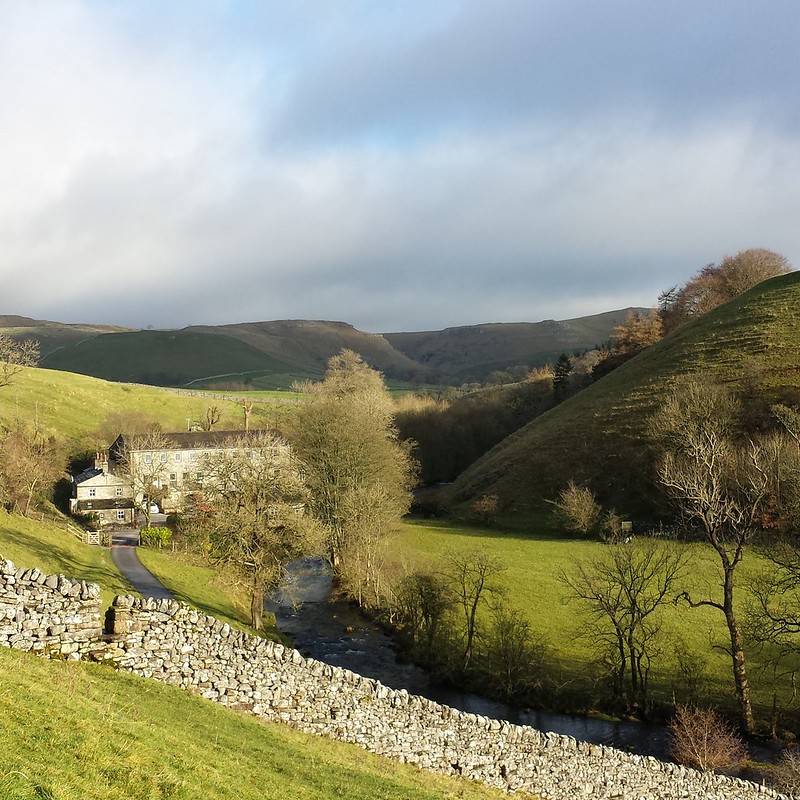
Of course, you knew that already. I've just spent the last weekend walking in North Yorkshire taking in Malham Cove, Gordale Scar, Janet's Fosse and Kirkby Malham. As you can imagine, it was very cold indeed. I was glad of my merino wool base layers and sturdy walking boots even though it was sometimes cumbersome to be wearing so many layers, especially when walking up a steep hillside. I felt, and looked, like a Michelin man but at least I was warm enough. We had all weather thrown at us at some point in the weekend - sunshine, wind, rain and snow. Sometimes it was a battle of wits to combat the wind and rain and eating your lunch in a biting wind is no fun, but then you're blessed with magnificent views when you get to the top and you can marvel at the wonder of nature from the huge to the tiny.
It's good to get back to nature. I don't do it nearly enough being a city girl. It was one of my challenges this year to do 50 walks in nature. I'm ashamed to say that I'm only half way through that challenge and realistically, I won't reach the target. But it's given me a good indication of what to improve on for my challenges for next year. More on that another time.
The weekend wouldn't have come together at all had I not stumbled across Glamoraks - a blog by Melissa Talago and related Facebook group aimed at women walkers. I joined with the thought that seeing others talk about their walks, I could be encouraged to do it more to fulfil my goal for the year. It didn't quite work out that way, at least not yet.
I am rather glad I decided to join the group's first weekend away in a YHA Hostel in Malham - a place I've never been and didn't know I wanted to visit until I got there. I persuaded one friend to join me, but apart from that, I didn't know anyone else in the group of 15 women from all over the country. That can be daunting. I wasn't sure who I might end up sharing a room with or what the other women would be like and could I hack walking in the cold. As it happens, I had great roomies and made new friends and ate good food over the weekend whilst getting some (very) fresh air and exercise. And all because of the serendipity of social media and having stumbled across the Glamoraks blog.
I'm not sure what lessons can be learned here. Perhaps it's about taking (calculated) risks and trying something new. Or maybe it's about the reach of social media and the power it has to connect people and join them together in a common purpose. Or is it learning that the challenge is worth it as you get rewarded with fabulous views and a sense of achivement. Or is it about finding out how good the Ordnance Survey subscription is for walkers as it works offline and you can zoom in on the screen? It's probably a bit of all of those and more. Whilst I mull that over, take a look at some of the pictures I took. If you click on the image, it will take you through to the album on Flickr.
It's good to get back to nature. I don't do it nearly enough being a city girl. It was one of my challenges this year to do 50 walks in nature. I'm ashamed to say that I'm only half way through that challenge and realistically, I won't reach the target. But it's given me a good indication of what to improve on for my challenges for next year. More on that another time.
The weekend wouldn't have come together at all had I not stumbled across Glamoraks - a blog by Melissa Talago and related Facebook group aimed at women walkers. I joined with the thought that seeing others talk about their walks, I could be encouraged to do it more to fulfil my goal for the year. It didn't quite work out that way, at least not yet.
I am rather glad I decided to join the group's first weekend away in a YHA Hostel in Malham - a place I've never been and didn't know I wanted to visit until I got there. I persuaded one friend to join me, but apart from that, I didn't know anyone else in the group of 15 women from all over the country. That can be daunting. I wasn't sure who I might end up sharing a room with or what the other women would be like and could I hack walking in the cold. As it happens, I had great roomies and made new friends and ate good food over the weekend whilst getting some (very) fresh air and exercise. And all because of the serendipity of social media and having stumbled across the Glamoraks blog.
I'm not sure what lessons can be learned here. Perhaps it's about taking (calculated) risks and trying something new. Or maybe it's about the reach of social media and the power it has to connect people and join them together in a common purpose. Or is it learning that the challenge is worth it as you get rewarded with fabulous views and a sense of achivement. Or is it about finding out how good the Ordnance Survey subscription is for walkers as it works offline and you can zoom in on the screen? It's probably a bit of all of those and more. Whilst I mull that over, take a look at some of the pictures I took. If you click on the image, it will take you through to the album on Flickr.
Day 27/30 NaBloPoMo
Sunday, November 26, 2017
Will we be experiencing theatre via VR in the future?
![]() |
| RSC Titus Andronicus 2017 |
In the experiment, a group of participants viewed a 360 degree film of Titus Andronicus via HTC Vive VR headsets and wore heart rate monitors. The film was created by Gorilla In The Room. The experience allowed participants to move their head and could view any aspect of the theatre, stage, audience as they wished as if they were seated in that position at the theatre. This was compared with a previous project to monitor the emotional engagement of a theatre and cinema audience by the same research team.
The 360 degree filmed VR experience was viewed in 5 parts – rather than in the usual 2 parts that you would experience in the theatre or cinema. There were a mix of short breaks as well as a main interval where you would normally expect to have one.
These results are based on the data from 107 participants and some of the findings include:
There are more people with a raised heart rate in Theatre at the very start of the performance than we see for Cinema and 360 filmed VR experience - this is perhaps driven by higher levels of anticipation and excitement.
Watching Titus Andronicus raised heart rate to a level equivalent of a 5-minute cardio workout”
Audience heart rate is raised to the level of a cardio workout zone for an average of 5 minutes (3% of time) across the full performance of Titus Andronicus[1]. This is consistent across participants in Theatre, Cinema and the 360 filmed VR experience. This chimes with my piece earlier in the week of research into the Dreamgirls audience.
Men showed a greater emotional reaction - The heart rate data of the men in the study suggests a very slightly greater increase in reaction compared to female participants. I wonder if this was down to the subject matter. I can't say I've ever been drawn to watch Titus Andronicus.
A 360 degree filmed VR experience has the power to transport you into the theatre. 91% of those watching the performance via the VR headset felt there were times when they were physically present in the theatre. This compares to approximately 63% for those watching the show live on screen in the cinema. That sounds very promising for the future of theatre and having the ability to bring a very full experience of the theatre to the living room.
Theatre wins out over cinema in overall positive engagement and empathy. Participant feedback indicated greater overall positivity (excellent/awesome etc.), engagement (gripping, thought provoking, empathy etc.) and shock in Theatre – with more attention to the elements of staging, costume, set, plot, music and choreography. Those watching via 360 filmed VR also had a higher level of emotional engagement than the cinema audiences.
Lower shock levels in the cinema may indicate that viewers feel further removed/desensitised to the violence/gore. However, cinema was perceived to be significantly more ‘moving’ than either theatre of 360 video - possibly due to the cinematic style directing the viewers eye to the details of actor expressions (e.g. tear rolling down Lavinia’s cheek) which are often missed by theatre audiences due to the distance from the stage. You can't get close-ups in the theatre like you can on a cinema screen.
There are still issues with VR. It's not for everyone as it can trigger nausea and vertigo. The headsets are heavy and they're isolating so you need to be in a safe environment to use it as you're completely cut off from all other audio or visual clues as to what may be going on around you.
The RSC is naturally encouraged by the research. Theatre is outperforming cinema in terms of engagement, empathy and ability to shock. Sarah Ellis, RSC Director of Digital Development said: ‘This presented a unique opportunity for us to compare the emotional reaction to one of Shakespeare’s plays on three different platforms. The results have shown us that even after more than 400 years, Shakespeare’s work still packs an emotional punch to today’s audiences wherever and however it is experienced'.
Day 26/30 NaBloPoMo
Saturday, November 25, 2017
What three things should we teach at school?
It's not often that a stranger talks to you when you're travelling on the tube in London, but it happened to me the other night on my way to the theatre. A man, who had clearly had a drink, plonked himself into the seat next to mine. He had his open can of booze in a brown paper bag which is never a good look, and moreover, drinking alcohol is illegal on London Transport. He seemed harmless enough though.
And then he started talking to me. I felt a very mild panic. I mean, it's just not normal for anyone to talk to a stranger on the underground and I'm wondering why on earth he'd singled me out for a chat. I don't remember what he began to talk about. He was having a moan about something or other and I was humouring him a little. And then he asked, if there were only three topics you could teach at school today, what would they be? This was putting me on the spot a little and was completely out of the blue. I'd never given it any thought previously but my answer was more or less instantaneous. I guess this was based on instinct.
The three things I came up with were Reading, Writing and Thinking. The reason being that in our digital world, reading is a universal requirement. I read things all day, every day - on a phone screen, on my laptop, in the freebie newspapers, on posters, in shops, on road signs - the written word is everywhere. Writing - whether that's handwriting or on a keyboard is also a necessity. Learning to touchtype back in 1994 at South Thames College is the best £7 I ever spent. I know new voice-enabled interfaces are coming and even though I have Cortana on my laptop and OK Google on my phone, I still can't bring myself to use them, even if there's no-one around to listen to me.
On the third subject, Thinking, he challenged me asking if it could be taught. I was about to get off the train at this point and I said 'yes'. I didn't really think about it but my hunch is you can teach people how to think by giving them the space to think and giving the right examples and encouragement to do it.
When I was running my own mobile marketing agency, I recruited many young people, most of whom were still studying and were doing a placement with me, or they were new graduates. The ones who were successful were the ones who could think for themselves. Many of the young people I interviewed lacked critical thought and lacked the ability to work things out for themselves. We're talking 13 or 14 years ago now. Online social networking wasn't really a thing at that point for the mainstream. Flickr was the social network I participated in most. LinkedIn was a newish company. Streaming music wasn't a thing. But we did have email, we had Google and Amazon and we had mobile phones with SMS and java games and apps and the first cameraphones.
At the time, the education system was still geared up for more traditional type jobs in marketing and business. Even though the web was huge, it wasn't nearly as pervasive as it is today. Perhaps we needed people who could follow instruction more than they could think back then and that's why degrees were structured to produce those results.
In this current climate of constant change, especially when it comes to internet technologies, one of the key employability skills to have is adaptability. We need to see what's happening and adapt. The jobs we're doing now may not exist in the future. Or if they do, they will be vastly different on a day to day basis. And with increasing reliance on Google or Bing as our external brain, critical thought is essential. We need to work out what's fake and what's real, which things to take seriously and which to ignore, which way to build your software and connect your APIs and which APIs to ignore.
Of course, this is a hypothetical situation. We're not going to be limiting any school curriculum to just three subjects. But what I would like to see is some discussion and thought around what skills we need to perform well in the years to come and maybe use the topics such as history, geography, philosophy or physics to exercise those skills whilst learning a subject at the same time.
It turns out, I'm not the only one who thinks that Thinking is critical for being a successful human being. I've just discovered this article and podcast on the importance of thinking. Check it out for yourself. I think there are some good points in it.
Out of interest, what would your three subjects be and why?
Day 25/30 NaBloPoMo
And then he started talking to me. I felt a very mild panic. I mean, it's just not normal for anyone to talk to a stranger on the underground and I'm wondering why on earth he'd singled me out for a chat. I don't remember what he began to talk about. He was having a moan about something or other and I was humouring him a little. And then he asked, if there were only three topics you could teach at school today, what would they be? This was putting me on the spot a little and was completely out of the blue. I'd never given it any thought previously but my answer was more or less instantaneous. I guess this was based on instinct.
The three things I came up with were Reading, Writing and Thinking. The reason being that in our digital world, reading is a universal requirement. I read things all day, every day - on a phone screen, on my laptop, in the freebie newspapers, on posters, in shops, on road signs - the written word is everywhere. Writing - whether that's handwriting or on a keyboard is also a necessity. Learning to touchtype back in 1994 at South Thames College is the best £7 I ever spent. I know new voice-enabled interfaces are coming and even though I have Cortana on my laptop and OK Google on my phone, I still can't bring myself to use them, even if there's no-one around to listen to me.
On the third subject, Thinking, he challenged me asking if it could be taught. I was about to get off the train at this point and I said 'yes'. I didn't really think about it but my hunch is you can teach people how to think by giving them the space to think and giving the right examples and encouragement to do it.
When I was running my own mobile marketing agency, I recruited many young people, most of whom were still studying and were doing a placement with me, or they were new graduates. The ones who were successful were the ones who could think for themselves. Many of the young people I interviewed lacked critical thought and lacked the ability to work things out for themselves. We're talking 13 or 14 years ago now. Online social networking wasn't really a thing at that point for the mainstream. Flickr was the social network I participated in most. LinkedIn was a newish company. Streaming music wasn't a thing. But we did have email, we had Google and Amazon and we had mobile phones with SMS and java games and apps and the first cameraphones.
At the time, the education system was still geared up for more traditional type jobs in marketing and business. Even though the web was huge, it wasn't nearly as pervasive as it is today. Perhaps we needed people who could follow instruction more than they could think back then and that's why degrees were structured to produce those results.
In this current climate of constant change, especially when it comes to internet technologies, one of the key employability skills to have is adaptability. We need to see what's happening and adapt. The jobs we're doing now may not exist in the future. Or if they do, they will be vastly different on a day to day basis. And with increasing reliance on Google or Bing as our external brain, critical thought is essential. We need to work out what's fake and what's real, which things to take seriously and which to ignore, which way to build your software and connect your APIs and which APIs to ignore.
Of course, this is a hypothetical situation. We're not going to be limiting any school curriculum to just three subjects. But what I would like to see is some discussion and thought around what skills we need to perform well in the years to come and maybe use the topics such as history, geography, philosophy or physics to exercise those skills whilst learning a subject at the same time.
It turns out, I'm not the only one who thinks that Thinking is critical for being a successful human being. I've just discovered this article and podcast on the importance of thinking. Check it out for yourself. I think there are some good points in it.
Out of interest, what would your three subjects be and why?
Day 25/30 NaBloPoMo
Subscribe to:
Posts (Atom)