Showing posts with label social media. Show all posts
Showing posts with label social media. Show all posts
Thursday, December 21, 2017
Ever stuck for where to go for a late night drink or meal in London?
My friend Emma has the answer for you with her 24 Hour London app (available on iOS and Android). The idea behind the app is to provide people with information about bars, restaurants and clubs that are open late at night with the added bonus of special offers of discounts and even free drinks at some of the establishments listed.
The app is in early stages but is gaining a following and Emma's on a mission to capitalise on that. Londoners, if you're ever out and about at night, then do download the app - it's free and I expect you'll find it useful.
As part of Emma's initial marketing push, she's using Thunderclap to help spread the word about 24 Hour London in January. Thunderclap simply posts a tweet or a status update on your feed at the time and day allotted and that's it. It doesn't ask you to connect your contacts or spam your friends by email. It costs you nothing save for a few moments of your time.
Your assistance will mean more downloads for her and more footfall for the venues she works with and maybe free drinks for you and your friends if you use the app. Plus, you'll probably find out about places near where you live or work that you never knew opened late at night. I'm also really interested to see how this campaign works. I've never tried Thunderclap. If there's any insight from the campaign, I'll share it here in due course.
Click on the link here or the image above, you too can add your voice to the campaign.
Day 21/25 Blogmas
Saturday, December 16, 2017
It was my 11th Twitter birthday yesterday
I've been a member since 15th December 2006. Eleven years. I was one of the early adopters in the UK. This is how it happened.
I was part of the London Tech community's Christmas 'Mega Bash' of 2006 led by Ian Forrester of BBC Backstage. The idea was to get all the London tech community groups together and to have a big Christmas bash on Saturday 9 December 2006. Swedish Beers was one of the groups involved alongside London Girl Geekdinners, Geekdinners, London Perlmongers, London Webstandards Group, London Ruby user group, Open rights group, London 2.0, Mobile Monday, LondonSEO. Of those, Swedish Beers is definitely still going strong with no sign of letting up any time soon (I hope).
The sponsors on the night fared better. Trusted Places went to Yell. SkillsMatter, Chinwag, TechCrunch UK, and O'Reilly are all still around in one form or another. AdMob sold to Google for megabucks. And Connect Me Anywhere was the precursor to Iovox.
Twitter didn't quite make the grade as a full-on sponsor, but they were involved in some way. It's a long time ago. I can't remember the detail. There was some Twitter activity that night, but I hadn't been organised enough to sign up to the service. And in all honesty, I really couldn't see the point of micro-blogging. I'd been doing long-form blogging for 3 years at that point and I'd been an active member of Flickr since 2005 and even had a PRO account so I could store more photos. That was my social network of choice at the time. We used that and Moblog a bit like Instagram is used now except we took our photos on our mobile or cameras and uploaded via desktop or laptop computer. My business networking was done on Soflow, Ecademy and LinkedIn. So I could see the point of social networking (although we didn't call it that then), but microblogging? Yeah, wasn't so sure on that one.
I took some nudging from Ian to get signed up to Twitter. I did it as a favour to him after the party to help him meet his obligations to Twitter. And in those early days, I really couldn't see the point so I wasn't particularly active. And my first tweets don't reveal very much of note either. Also at the time, Twitter wasn't market leader. We also had Jaiku and Pownce. Jaiku has more functionality. I seem to remember Pownce having some weird USP that I can't quite remember, but they were both also about micro-blogging.
Fast forward to February 2007, and it's 3GSM in Barcelona - what is now Mobile World Congress. Twitter is integrated with SMS and you could do things like create an interest group and everyone in the group would receive the messages via SMS. You could post and receive via SMS for free as well. In Barcelona, on roaming, and many of us on the same mission to find out where the action was at 3GSM, Twitter suddenly had a purpose. The most similar thing to that now would be a WhatsApp or WeChat Group. Now I got the point. We could share messages with each other easily and for free. We could find out about what was going on and get answers to questions. All useful stuff. And now, all superseded by other services.
It's fair to say that for a few years I was an enthusiastic Twitter user. I met many people via Twitter. Engaged in the offline Twitter meet-ups and I met new clients via Twitter as well. It was still small enough that you could keep track of the people you were following and in turn, you could be found and make an impression. Most people still couldn't see the point of it so it stayed in the category of quality not quantity in those days.
But as the masses joined in, the usefulness and relevance for me decreased. And for the last few years, I've hardly used it at all. Facebook and LinkedIn have taken over in usefulness and reach for me - particularly the former, even for business-related content.
But, I'm still there and I'm using it a bit more again since I picked up the blogging pace this November. It's harder work because of the volume of stuff to wade through. And I'm not sure how much reach I get from Twitter. My blog stats say Google and Facebook are my main drivers of traffic with Twitter barely showing a blip these days. But maybe that will change now that I'm a bit more engaged. These platforms have a way of ebbing and flowing over time. And maybe now that Twitter is not quite as micro-blogging as before, it will make a difference.
If you'd like to relive that London Tech Mega Christmas Bash 2006, you can do that here. And if you're feeling brave, you can check out the photos. We certainly look younger, but so many of the photos are deeply, deeply unflattering!
Day 16/25 Blogmas
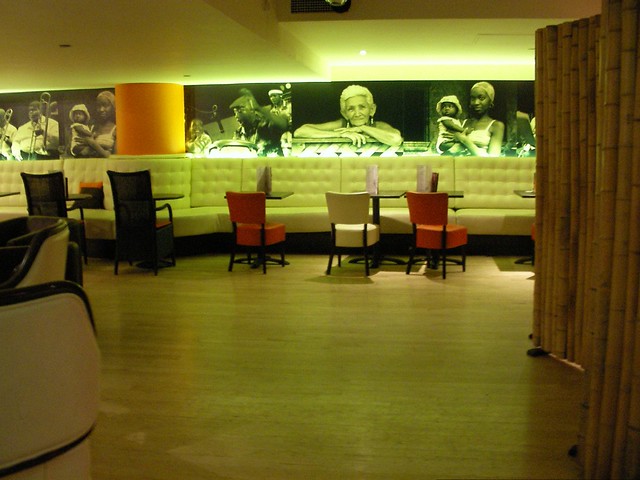 |
| The calm before the storm London Tech Christmas Party December 2006 |
The sponsors on the night fared better. Trusted Places went to Yell. SkillsMatter, Chinwag, TechCrunch UK, and O'Reilly are all still around in one form or another. AdMob sold to Google for megabucks. And Connect Me Anywhere was the precursor to Iovox.
Twitter didn't quite make the grade as a full-on sponsor, but they were involved in some way. It's a long time ago. I can't remember the detail. There was some Twitter activity that night, but I hadn't been organised enough to sign up to the service. And in all honesty, I really couldn't see the point of micro-blogging. I'd been doing long-form blogging for 3 years at that point and I'd been an active member of Flickr since 2005 and even had a PRO account so I could store more photos. That was my social network of choice at the time. We used that and Moblog a bit like Instagram is used now except we took our photos on our mobile or cameras and uploaded via desktop or laptop computer. My business networking was done on Soflow, Ecademy and LinkedIn. So I could see the point of social networking (although we didn't call it that then), but microblogging? Yeah, wasn't so sure on that one.
I took some nudging from Ian to get signed up to Twitter. I did it as a favour to him after the party to help him meet his obligations to Twitter. And in those early days, I really couldn't see the point so I wasn't particularly active. And my first tweets don't reveal very much of note either. Also at the time, Twitter wasn't market leader. We also had Jaiku and Pownce. Jaiku has more functionality. I seem to remember Pownce having some weird USP that I can't quite remember, but they were both also about micro-blogging.
Fast forward to February 2007, and it's 3GSM in Barcelona - what is now Mobile World Congress. Twitter is integrated with SMS and you could do things like create an interest group and everyone in the group would receive the messages via SMS. You could post and receive via SMS for free as well. In Barcelona, on roaming, and many of us on the same mission to find out where the action was at 3GSM, Twitter suddenly had a purpose. The most similar thing to that now would be a WhatsApp or WeChat Group. Now I got the point. We could share messages with each other easily and for free. We could find out about what was going on and get answers to questions. All useful stuff. And now, all superseded by other services.
It's fair to say that for a few years I was an enthusiastic Twitter user. I met many people via Twitter. Engaged in the offline Twitter meet-ups and I met new clients via Twitter as well. It was still small enough that you could keep track of the people you were following and in turn, you could be found and make an impression. Most people still couldn't see the point of it so it stayed in the category of quality not quantity in those days.
But as the masses joined in, the usefulness and relevance for me decreased. And for the last few years, I've hardly used it at all. Facebook and LinkedIn have taken over in usefulness and reach for me - particularly the former, even for business-related content.
But, I'm still there and I'm using it a bit more again since I picked up the blogging pace this November. It's harder work because of the volume of stuff to wade through. And I'm not sure how much reach I get from Twitter. My blog stats say Google and Facebook are my main drivers of traffic with Twitter barely showing a blip these days. But maybe that will change now that I'm a bit more engaged. These platforms have a way of ebbing and flowing over time. And maybe now that Twitter is not quite as micro-blogging as before, it will make a difference.
If you'd like to relive that London Tech Mega Christmas Bash 2006, you can do that here. And if you're feeling brave, you can check out the photos. We certainly look younger, but so many of the photos are deeply, deeply unflattering!
Day 16/25 Blogmas
Monday, December 11, 2017
Mobile phone etiquette raises its head again...
I go to the theatre a lot and inevitably, at some shows, there will be a mobile phone that starts ringing part-way through the performance. You think you've turned your phone to silent but for some reason it isn't silent. Mistakes happen. I can ignore it. It happened once to me. A phone, for whom nobody knows the number (it has a US number), started vibrating in my bag. I didn't react because I didn't think it could be my phone as no-one knows the number so who would be calling me? It turns out it was my phone and it was some spammer bulk dialling and taking a chance on the number being live.
I must admit, I don't like it when I can see someone has their phone screen on during a performance. Those screens are really bright and when you're plunged into darkness in a theatre, if you're upstairs in the Royal or Upper Circle, you can see a phone light go on straight away. It's distracting. If there were a persistent offender sitting near me, I would probably have a word with them. In the same way that I would have a word if someone was talking during a performance. I don't have to do it very often, but I do do it.
Unfortunately, calling out poor etiquette can have consequences. Just last week, The Stage reports that there was an incident at The Old Vic in London. Adam Gale, a theatre producer from New York witnessed a woman using her mobile phone throughout the first half of a performance of A Christmas Carol and asked her to stop using it. I think that's fair enough. I would probably do the same in the same circumstances. Unfortunately for Adam, during the interval, the woman's partner punched Mr Gale and the couple left the theatre. The theatre confirmed that there had been an altercation between three people over a mobile phone.
It's not the first time I've read of tempers fraying in a theatre over the use of a mobile phone. Arguably, it's something that ushers should be dealing with more promptly. However, ushers are not particularly well paid and they're generally young people and potentially may be reticent to intervene in case it causes aggravation.
Some are calling for a zero tolerance policy for mobile phones in the theatre. In China, they use lasers to shame patrons using their mobile phones during a performance. Numerous examples of actors calling theatre-goers out when their phone rings or they can see the light from a mobile screen are noted here. Back in 2015, Benedict Cumberbatch made an impassioned plea to the audience about restricting their use of their phones to outside of the performance. The problem persists.
And there will be some cases where it's important for someone to be able to access their phone during a performance - a doctor on call, for example. Or, as I experienced this week, there was a reviewer taking notes about the performance I was watching and using his phone as a torch. He was using it as subtly as possible with the screen turned towards the page and we were both at the back so unlikely to distract anyone much. Once I could see what he was doing, I put it out of my mind. In both instances, I would ask in that people turn their screen brightness right down. It helps a bit.
Meanwhile, theatre desperately needs publicity about shows and performances that are best shared via mobile devices. They need the tweets, Facebook statuses and Instagram photos so that the word gets out about the show. Yet, theatres can be very tough with theatre goers about taking a photo of the stage on arrival, for example if you're checking in to Swarm or Facebook. That seems to me to be over-zealous. There's a big difference between a pre-show selfie and a mid-show recording.
 Occasionally with shows, the audience is encouraged to get their phones out and take photos and video. They do this at the end of School of Rock and it's a touch of genius. It's at a point in the story where it feels most like a rock concert and phones are most definitely part and parcel of a rock concert. The genius part of it though is that the audience take hundreds of amazing action shots of the show and immediately share them with their friends and family telling them how fantastic the show is. (And it really is a fantastic show).
So there's a time and a place. And there's awareness of how your behaviour may affect others experience. And there's downright selfishness.
Zero tolerance is not the answer. You really don't know the reason someone has their phone on. There might be a valid reason. And there will always be fellow theatregoers who munch or talk their way through a show. I dunno. Maybe some relaxation of photography rules pre and post show coupled with a firmer stance from (trained) ushers during a show may pay dividends.
And let's not mention the annoying lights from a smartwatch or Fitbit...
Day 11/25 Blogmas
I must admit, I don't like it when I can see someone has their phone screen on during a performance. Those screens are really bright and when you're plunged into darkness in a theatre, if you're upstairs in the Royal or Upper Circle, you can see a phone light go on straight away. It's distracting. If there were a persistent offender sitting near me, I would probably have a word with them. In the same way that I would have a word if someone was talking during a performance. I don't have to do it very often, but I do do it.
Unfortunately, calling out poor etiquette can have consequences. Just last week, The Stage reports that there was an incident at The Old Vic in London. Adam Gale, a theatre producer from New York witnessed a woman using her mobile phone throughout the first half of a performance of A Christmas Carol and asked her to stop using it. I think that's fair enough. I would probably do the same in the same circumstances. Unfortunately for Adam, during the interval, the woman's partner punched Mr Gale and the couple left the theatre. The theatre confirmed that there had been an altercation between three people over a mobile phone.
It's not the first time I've read of tempers fraying in a theatre over the use of a mobile phone. Arguably, it's something that ushers should be dealing with more promptly. However, ushers are not particularly well paid and they're generally young people and potentially may be reticent to intervene in case it causes aggravation.
Some are calling for a zero tolerance policy for mobile phones in the theatre. In China, they use lasers to shame patrons using their mobile phones during a performance. Numerous examples of actors calling theatre-goers out when their phone rings or they can see the light from a mobile screen are noted here. Back in 2015, Benedict Cumberbatch made an impassioned plea to the audience about restricting their use of their phones to outside of the performance. The problem persists.
And there will be some cases where it's important for someone to be able to access their phone during a performance - a doctor on call, for example. Or, as I experienced this week, there was a reviewer taking notes about the performance I was watching and using his phone as a torch. He was using it as subtly as possible with the screen turned towards the page and we were both at the back so unlikely to distract anyone much. Once I could see what he was doing, I put it out of my mind. In both instances, I would ask in that people turn their screen brightness right down. It helps a bit.
Meanwhile, theatre desperately needs publicity about shows and performances that are best shared via mobile devices. They need the tweets, Facebook statuses and Instagram photos so that the word gets out about the show. Yet, theatres can be very tough with theatre goers about taking a photo of the stage on arrival, for example if you're checking in to Swarm or Facebook. That seems to me to be over-zealous. There's a big difference between a pre-show selfie and a mid-show recording.

So there's a time and a place. And there's awareness of how your behaviour may affect others experience. And there's downright selfishness.
Zero tolerance is not the answer. You really don't know the reason someone has their phone on. There might be a valid reason. And there will always be fellow theatregoers who munch or talk their way through a show. I dunno. Maybe some relaxation of photography rules pre and post show coupled with a firmer stance from (trained) ushers during a show may pay dividends.
And let's not mention the annoying lights from a smartwatch or Fitbit...
Day 11/25 Blogmas
Wednesday, December 06, 2017
Contrived Exclusivity over Substance
I'm not usually one for swanky bars or restaurants but yesterday, a friend and I fancied an afternoon treat, so we thought we'd give the Radio Rooftop bar a go. The bar is on the roof of the ME Hotel in London's Aldwych. That means it has amazing views of the river. It has always been billed as an exclusive place. We did consider booking a table and I enquired about it. The manager emailed back to say there was a minimum spend of £25 each + service to book a table but at that time, we could probably just walk up and find a spot to enjoy a drink and a chat. I should add that if you want to book a table for a larger group, the minimum spend is £75 per person.
I rocked up at the appointed time already knowing that my companion was running late. I figured that I could bag us both a table or spot at the bar before it got busy with the early evening, post-work crowd. I've never been before so I just wandered through the hotel behind a man who clearly looked like he knew where he was going. Since I was loaded with shopping bags, no-one stopped me. I expect they thought I was likely to be a guest in the hotel. I headed to the back of the hotel and got in the lift and went straight up to the bar. I didn't even know there was a separate entrance for the lift to the roof.
On asking for a table, I was told that there was nothing available - in fairness, the bar was busy but certainly not full - but I could sit at the bar. I sat down, pulled up another bar stool for my friend, tidied my shopping bags out of the way and waited. With my phone and the charming French bar man for company, I was quite enjoying being in a different environment and doing some people watching.
Next thing, I'm getting a flurry of WhatsApp messages from my friend saying they won't let her inside to take the lift. Apparently there's a queue and even though I've saved her a spot and we're both solo, there was no way whatsoever the bouncers were going to let her in. This is at 5pm on a Tuesday afternoon and the bar, although busy, was certainly not full. I spoke to the manager at the bar and he somewhat grumpily told me that was the policy and there was nothing he would do. My friend just had to wait her turn, frustrating though that is.
There were about 20 people in front of her. Fortunately, half of those people gave up waiting having been at the receiving end of the surly bouncers. That meant the wait wasn't too long and eventually we were reunited. My friend and I had a nice drink and chat together, and we had some lovely tapas. The crab cakes were particularly delicious and the bar staff we engaged with were utterly charming. We can't say the same of the door staff or the manager unfortunately but we had a nice enough time there.
I think I would describe this as contrived exclusivity.
Did the slightly painful wait make the experience in the bar even better for us? In this instance, I don't think so. I'm unlikely to be adding this bar to my favourite bars of London list.It seems that there are plenty of other customers who respond well to this deliberate positioning strategy. The mix of swanky surroundings, a good cocktail menu, and this contrived exclusivity seems to hit the spot. Maybe it makes people feel special for being the lucky ones who are in there. Perhaps by making it that bit harder to get into, it attracts only a certain type of clientele, and probably a rich clientele and so the visitors there find others just like them. Or maybe there's more to it than that?
I'm not saying the Radio Rooftop Bar has no substance. The food was tasty, the views are great and the waiting staff are very nice, but I can't help feeling that this contrived exclusivity makes the place feel a lot better than it actually is to a certain type of customer.
As so often happens with me, other things crop up in my timeline that are very pertinent to something I've just experienced. When I got home last night, I spotted this on Twitter.

And then today, when I was wondering what I should write about today, I read this article from Vice about how someone made his shed the top rated restaurant on TripAdvisor. It's a fascinating read and tells us a lot about human behaviour. Exclusivity plus high ratings seems to have made 'The Shed' a big hit even though there was absolutely no substance to it at all.

So maybe there is something in this contrived exclusivity mullarkey. I'm racking my brain though as to how this could work in a digital or mobile environment. Something for me to ponder further.
Day 6/25 Blogmas
I rocked up at the appointed time already knowing that my companion was running late. I figured that I could bag us both a table or spot at the bar before it got busy with the early evening, post-work crowd. I've never been before so I just wandered through the hotel behind a man who clearly looked like he knew where he was going. Since I was loaded with shopping bags, no-one stopped me. I expect they thought I was likely to be a guest in the hotel. I headed to the back of the hotel and got in the lift and went straight up to the bar. I didn't even know there was a separate entrance for the lift to the roof.
On asking for a table, I was told that there was nothing available - in fairness, the bar was busy but certainly not full - but I could sit at the bar. I sat down, pulled up another bar stool for my friend, tidied my shopping bags out of the way and waited. With my phone and the charming French bar man for company, I was quite enjoying being in a different environment and doing some people watching.
Next thing, I'm getting a flurry of WhatsApp messages from my friend saying they won't let her inside to take the lift. Apparently there's a queue and even though I've saved her a spot and we're both solo, there was no way whatsoever the bouncers were going to let her in. This is at 5pm on a Tuesday afternoon and the bar, although busy, was certainly not full. I spoke to the manager at the bar and he somewhat grumpily told me that was the policy and there was nothing he would do. My friend just had to wait her turn, frustrating though that is.
There were about 20 people in front of her. Fortunately, half of those people gave up waiting having been at the receiving end of the surly bouncers. That meant the wait wasn't too long and eventually we were reunited. My friend and I had a nice drink and chat together, and we had some lovely tapas. The crab cakes were particularly delicious and the bar staff we engaged with were utterly charming. We can't say the same of the door staff or the manager unfortunately but we had a nice enough time there.
I think I would describe this as contrived exclusivity.
Did the slightly painful wait make the experience in the bar even better for us? In this instance, I don't think so. I'm unlikely to be adding this bar to my favourite bars of London list.It seems that there are plenty of other customers who respond well to this deliberate positioning strategy. The mix of swanky surroundings, a good cocktail menu, and this contrived exclusivity seems to hit the spot. Maybe it makes people feel special for being the lucky ones who are in there. Perhaps by making it that bit harder to get into, it attracts only a certain type of clientele, and probably a rich clientele and so the visitors there find others just like them. Or maybe there's more to it than that?
I'm not saying the Radio Rooftop Bar has no substance. The food was tasty, the views are great and the waiting staff are very nice, but I can't help feeling that this contrived exclusivity makes the place feel a lot better than it actually is to a certain type of customer.
As so often happens with me, other things crop up in my timeline that are very pertinent to something I've just experienced. When I got home last night, I spotted this on Twitter.
Glamour, as opposed to style, is important in marketing terms so maybe the Power of Glamour needs to be on my reading list. You can get it over on Amazon.— The Agency Review (@TheAgencyReview) December 5, 2017How #glamour works and why you need to care about it. We review @Vpostrel’s #PowerofGlamour: https://t.co/kpRy1hU5Di #marketing #advertising

And then today, when I was wondering what I should write about today, I read this article from Vice about how someone made his shed the top rated restaurant on TripAdvisor. It's a fascinating read and tells us a lot about human behaviour. Exclusivity plus high ratings seems to have made 'The Shed' a big hit even though there was absolutely no substance to it at all.
So maybe there is something in this contrived exclusivity mullarkey. I'm racking my brain though as to how this could work in a digital or mobile environment. Something for me to ponder further.
Day 6/25 Blogmas
Monday, November 27, 2017
Walking is good for you
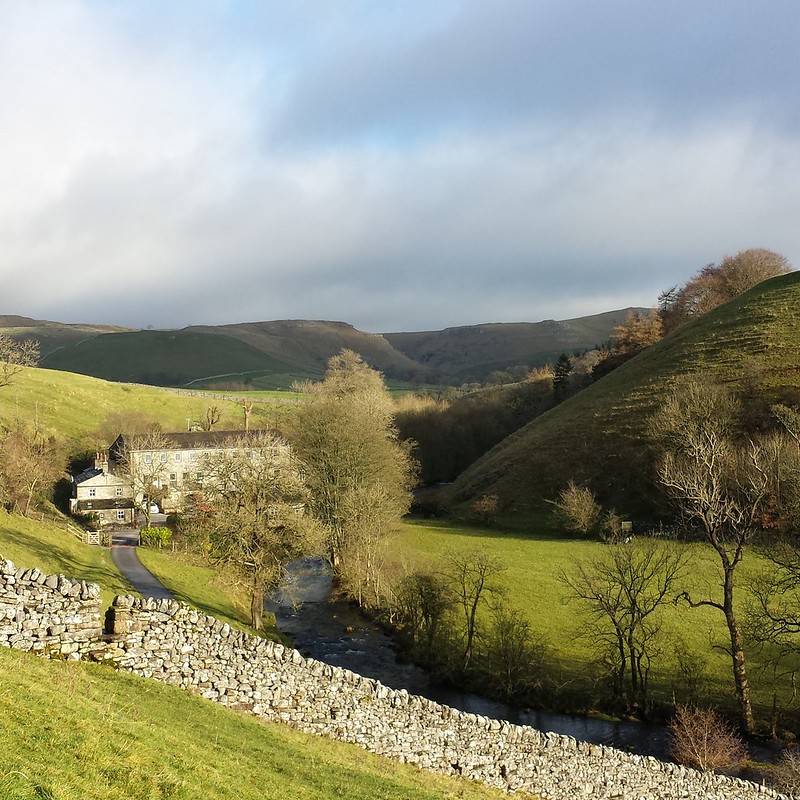
Of course, you knew that already. I've just spent the last weekend walking in North Yorkshire taking in Malham Cove, Gordale Scar, Janet's Fosse and Kirkby Malham. As you can imagine, it was very cold indeed. I was glad of my merino wool base layers and sturdy walking boots even though it was sometimes cumbersome to be wearing so many layers, especially when walking up a steep hillside. I felt, and looked, like a Michelin man but at least I was warm enough. We had all weather thrown at us at some point in the weekend - sunshine, wind, rain and snow. Sometimes it was a battle of wits to combat the wind and rain and eating your lunch in a biting wind is no fun, but then you're blessed with magnificent views when you get to the top and you can marvel at the wonder of nature from the huge to the tiny.
It's good to get back to nature. I don't do it nearly enough being a city girl. It was one of my challenges this year to do 50 walks in nature. I'm ashamed to say that I'm only half way through that challenge and realistically, I won't reach the target. But it's given me a good indication of what to improve on for my challenges for next year. More on that another time.
 The weekend wouldn't have come together at all had I not stumbled across Glamoraks - a blog by Melissa Talago and related Facebook group aimed at women walkers. I joined with the thought that seeing others talk about their walks, I could be encouraged to do it more to fulfil my goal for the year. It didn't quite work out that way, at least not yet.
I am rather glad I decided to join the group's first weekend away in a YHA Hostel in Malham - a place I've never been and didn't know I wanted to visit until I got there. I persuaded one friend to join me, but apart from that, I didn't know anyone else in the group of 15 women from all over the country. That can be daunting. I wasn't sure who I might end up sharing a room with or what the other women would be like and could I hack walking in the cold. As it happens, I had great roomies and made new friends and ate good food over the weekend whilst getting some (very) fresh air and exercise. And all because of the serendipity of social media and having stumbled across the Glamoraks blog.
I'm not sure what lessons can be learned here. Perhaps it's about taking (calculated) risks and trying something new. Or maybe it's about the reach of social media and the power it has to connect people and join them together in a common purpose. Or is it learning that the challenge is worth it as you get rewarded with fabulous views and a sense of achivement. Or is it about finding out how good the Ordnance Survey subscription is for walkers as it works offline and you can zoom in on the screen? It's probably a bit of all of those and more. Whilst I mull that over, take a look at some of the pictures I took. If you click on the image, it will take you through to the album on Flickr.
It's good to get back to nature. I don't do it nearly enough being a city girl. It was one of my challenges this year to do 50 walks in nature. I'm ashamed to say that I'm only half way through that challenge and realistically, I won't reach the target. But it's given me a good indication of what to improve on for my challenges for next year. More on that another time.
I am rather glad I decided to join the group's first weekend away in a YHA Hostel in Malham - a place I've never been and didn't know I wanted to visit until I got there. I persuaded one friend to join me, but apart from that, I didn't know anyone else in the group of 15 women from all over the country. That can be daunting. I wasn't sure who I might end up sharing a room with or what the other women would be like and could I hack walking in the cold. As it happens, I had great roomies and made new friends and ate good food over the weekend whilst getting some (very) fresh air and exercise. And all because of the serendipity of social media and having stumbled across the Glamoraks blog.
I'm not sure what lessons can be learned here. Perhaps it's about taking (calculated) risks and trying something new. Or maybe it's about the reach of social media and the power it has to connect people and join them together in a common purpose. Or is it learning that the challenge is worth it as you get rewarded with fabulous views and a sense of achivement. Or is it about finding out how good the Ordnance Survey subscription is for walkers as it works offline and you can zoom in on the screen? It's probably a bit of all of those and more. Whilst I mull that over, take a look at some of the pictures I took. If you click on the image, it will take you through to the album on Flickr.
And here's the official video of the weekend.
Day 27/30 NaBloPoMo
Sunday, November 19, 2017
Is technology impacting on human joy?

Not only that, but with every login comes a decision on passwords, how much data to share, who has access to the data, what will my friends see or think of me if they see this, who should I share my picture/status/blog post with, wondering what's in the privacy agreement I just agreed to, clicking on products you might buy and then never buy and perhaps were never really interested in, or you buy and regret. And there are many, many more.
These are often micro decisions that we barely notice but they are decisions nevertheless, and I think make us more prone to decision fatigue (definition here) which makes us, in turn, more prone to make poor decisions. Research from Cornell suggests that we make over 200 decisions about food on a daily basis. Ramp that up with decisions about what we wear, what we do, what we watch, where we go on a daily basis and that ramps up quickly.

I'm not sure if that's where JoyTech are going with this survey but it was an interesting exercise to complete it this morning. It got me thinking about whether or not technology brings me joy or not. I think sometimes it does - I enjoy writing (well, when I'm in 'flow' at least) and I enjoy getting inspiration for sewing and fabric projects from craft blogs and instagram. Although on the latter point, I know I spend too much looking at other people's work rather than working on my own projects. And I think that's partly down to decision fatigue and partly down to how powerful the digital dopamine hit has become.
If nothing else, by reading this post, hopefully you'll reflect a little on what brings you joy and act on it.
Day 18/30 NaBloPoMo (posted a day late)
Wednesday, November 15, 2017
Love Theatre Day is Today!
 |
| Action shot from the fabulous School of Rock |
This is an initiative run by Mar Dixon in association with The Stage newspaper according to this article. It's a social media initiative to encourage us to celebrate theatre around the world on Twitter and other social media platforms, hence the hashtag and it's happening today - Wednesday 15 November 2017.
There are three themes throughout the day:
1. #Backstage between 10am and midday to go behind the scenes and see parts of the theatre you would never normally get to see. I guess we've missed that one, but you can check the hashtag for what happened. I love backstage. There's a certain smell to it. It's very hard to describe. It's a nice smell and I'm guessing it's a mixture of wood, workshops and people, but it's unique to a theatre and unmistakable if you've ever experienced it.
2. #AskATheatre between 3pm and 5pm where you can talk direction to the creative teams about their shows and ask the questions you've always wanted to.
3. #Showtime between 7pm and 10pm when people will show what they're seeing at the theatre and what happens off stage during a show.
This campaign is for theatres, performing arts organisations and the general public to celebrate what they love about theatre and to encourage more people to go to the theatre. I think it's a great idea. And one that just wouldn't work without mobile phones. The ability to take pictures, write down our thoughts, record video and audio and distribute it easily and quickly to a wide audience is amazing. This certainly couldn't have happened 10 years ago. Technically, we could do all these things, but the uptake wasn't big enough to reach the mainstream. But today, it's a whole other story. One thing to be grateful for with the ubiquity of the technology.
There is something special about the theatre that keeps drawing me back and anything that encourages other people to enjoy that special something is a good thing in my book. So check out the hashtags, take pictures and share your stories from backstage, off-stage and in the audience and have a great #LoveTheatreDay.
 |
| The Safety Curtain from The Ashcroft Theatre in Croydon. |
Day 15/30 NabloPoMo
Sunday, November 05, 2017
Big questions for Big Tech
I've been participating in a discussion on a friend's Facebook page in the last few days. He's frustrated about the content he sees on Facebook, is blaming it on the algorithms and as a result wants to quit Facebook save for keeping a profile live so that he can be messaged by friends and family.
Fair enough, you might say. I know more than a few people who 'don't do Facebook'. I respect their reasons although it makes including them in a conversation tricky when they're not there. It's like trying to have a conversation with your mates in the pub and one of them is not with you.
I pointed out that one of the reasons I use Facebook is that I'm able, to a certain degree at least, to customise what I do and don't see. I do tell Facebook about the adverts I do and don't like. I turn people and pages off and on as I see fit. I've turned off nearly all mainstream news sites - the constant barrage of war, pestilence and famine is overwhelming when there's very little I can do about it and it was just making me feel depressed.
But there is a bigger discussion point and that's how Facebook polices the content shared on its service, especially in light of the allegation of Russian manipulation of voters in the US election - specifically by manipulating Facebook and the distribution of fake news content there.
I know fake news goes on. I do check my sources more often than not. I rarely take things as read when a friend posts a headline. Equally, I try to understand the bias, left or right, of TV and print media too. That takes time and effort. And most of the time, most of the people can't be bothered to do that or don't know that they could or should be doing that.
But coming back to the Russian fake news manipulation thing... that is actually a very big deal. It raises questions of ethics, what should and shouldn't be allowed to be published and how it's policed. This video from Professor Galloway is definitely worth a couple of minutes of your time.
h/t George Nimeh of Nimeh & Partners.
See also this article from the FT 'Ukraine says it warned Facebook of Russia fake news in 2015'.
Day 5/30 NaBloPoMo 2017
Fair enough, you might say. I know more than a few people who 'don't do Facebook'. I respect their reasons although it makes including them in a conversation tricky when they're not there. It's like trying to have a conversation with your mates in the pub and one of them is not with you.
I pointed out that one of the reasons I use Facebook is that I'm able, to a certain degree at least, to customise what I do and don't see. I do tell Facebook about the adverts I do and don't like. I turn people and pages off and on as I see fit. I've turned off nearly all mainstream news sites - the constant barrage of war, pestilence and famine is overwhelming when there's very little I can do about it and it was just making me feel depressed.
But there is a bigger discussion point and that's how Facebook polices the content shared on its service, especially in light of the allegation of Russian manipulation of voters in the US election - specifically by manipulating Facebook and the distribution of fake news content there.
I know fake news goes on. I do check my sources more often than not. I rarely take things as read when a friend posts a headline. Equally, I try to understand the bias, left or right, of TV and print media too. That takes time and effort. And most of the time, most of the people can't be bothered to do that or don't know that they could or should be doing that.
But coming back to the Russian fake news manipulation thing... that is actually a very big deal. It raises questions of ethics, what should and shouldn't be allowed to be published and how it's policed. This video from Professor Galloway is definitely worth a couple of minutes of your time.
h/t George Nimeh of Nimeh & Partners.
See also this article from the FT 'Ukraine says it warned Facebook of Russia fake news in 2015'.
Day 5/30 NaBloPoMo 2017
Monday, October 24, 2016
China, Big Data and Social Scoring - Big Brother Is, In Fact, Watching You
This isn't entirely new news from The Independent today, but it is an update about the Chinese government implementing a sort of comprehensive Klout score to each and every citizen and in turn, limiting access rights to certain services (including travelling by train or going abroad), goods and even jobs. It's the stuff of fiction of the kind of society Orwell was writing about.
There are clearly some very useful aspects to scoring to make certain things in life and business easier - after all, we have extensive credit scoring in Europe and the US. But that's not a perfect science by any stretch of the imagination and is prone to fraud, abuse and misuse. This will likely increase. I don't think there is an easy answer to this. Some kind of scoring is inevitable when there is data available (and it's available in bucket loads). We are being scored all the time at some level - from targeted advertising to credit scores. Is it the price we have to pay to have a digital life?
 On a side note, but not entirely unrelated, I recently went to see Orwell's 1984 in London at The Playhouse Theatre. It's very powerful and pertinent to today's society and I highly recommend it. It's on a limited run and closes on Saturday 29 October. Catch it while you still can. Or you could read the book as a refresher.
I first picked up on this story last December and wrote about it on my blog here in some depth. I hadn't exactly forgotten about it, but had brushed it to one side. But Big Data and the algorithms that are interrogating Big Data are not going away anytime soon. And in that respect, we're all affected in some way or other. We are being measured and tracked and assumptions are being made about us all the time based on our home address, where we work, where we travel to, the products we buy, how much money we have and who we are connected to."A high-level policy document released in September listed the sanctions that could be imposed on any person or company deemed to have fallen short. The overriding principle: “If trust is broken in one place, restrictions are imposed everywhere.” A whole range of privileges would be denied, while people and companies breaking social trust would also be subject to expanded daily supervision and random inspections.The ambition is to collect every scrap of information available online about China's companies and citizens in a single place – and then assign each of them a score based on their political, commercial, social and legal “credit.”"
There are clearly some very useful aspects to scoring to make certain things in life and business easier - after all, we have extensive credit scoring in Europe and the US. But that's not a perfect science by any stretch of the imagination and is prone to fraud, abuse and misuse. This will likely increase. I don't think there is an easy answer to this. Some kind of scoring is inevitable when there is data available (and it's available in bucket loads). We are being scored all the time at some level - from targeted advertising to credit scores. Is it the price we have to pay to have a digital life?
Tuesday, October 04, 2016
A little gender analysis of my social networks is revealing
I hosted a lovely dinner last week in London for ladies working in and around the mobile industry. I was thinking on the way home about hosting another one in a couple of months time and what I could do to attract more women to come along. And that got me thinking on how many women I'm connected to on social media. These thoughts were alongside those on the gender pay gap, women struggling to advance their careers (McKinsey), the advice that was circulating that women should remove their photos and resort to initials only on social media, why women don't seem to get pay rises and the depressing constant that women are not in senior roles in digital agencies or tech companies. So I did an analysis out of curiosity.
Twitter
My Twitter audience was easiest to analyse since Twitter does it for you via their advertising system. Just go to http://ads.twitter.com and check the analytics. It gives you a breakdown of gender, income, location and interests. What it doesn't do is measure who you are following so we'll have to leave that for another day when I'm truly bored and don't mind working it out one by one.
Out of just shy of 9000 Twitter followers, it's a 70/30 split male/female and my organic audience is 75/25 male/female. I'm guessing that's based on what tweets are shared and by whom.
You might say that this kind of breakdown is to be expected due to my long history in the mobile sector. However, I actively follow a lot sewists and crafters to get some variety and balance in my find. This group of tweeters tend to be mostly female. And my perspective is that a lot of them follow me back. But without further analysis, it's hard to say.
LinkedIn
I've been active in women's networking groups for almost 15 years including Digital Eve, WiMD, WiTT, Everywoman as well as my own female-focussed events. I'm also pretty good at adding people I meet to my LinkedIn as I use it as an outsourced contacts database if you like. I'm also good at weeding out fake or dodgy profiles. I do check people out before I add them due to the risk of spam, scame and phishing. I have about 3,500 contacts on LinkedIn as I've been active there since they first launched. I downloaded all of them.
Once I'd done some deduping, removal of people I knew to be deceased, accounts that were businesses rather than an individual and a handful of dodgy accounts, I worked out who was male and who was female based on either a) I knew them personally so could say male or female b) I checked their profile for evidence.
On that basis, the gender split was 69/31 male/female. Hmm. I thought there would have been more women in there.
Facebook
Finally, I downloaded all my Facebook data and got my friends list. (Go to settings and Download your Data and follow the instructions). I use Facebook for both personal friends and family as well as business friends as a way of keeping in touch. The total number of friends, once deceased, duplicates and non-attributable accounts were excluded was just over 1200. I didn't count my followers as part of this exercise. And I followed the same process as I did for LinkedIn.
The result - 60/40 male to female. A bit more balanced, but still skewed male. And that's with my having attended an all girls school for 9 years too!
What to conclude?
Without doing analysis on other peoples' accounts, it's hard to tell what is cause and what is effect and if this is a 'oh, it's just you, Helen' thing. I think there may be several contributing factors:
1. The fact that I've been working in mobile technology for the last 16 years has clearly meant that I've met more men in my line of work than I have women. And that's despite efforts made with hosting and attending female-focussed events. Where else am I supposed to meet other women in my sector for friendship, support and to do business with?
2. Women are more reticent about living life in public? I'm not sure about this, but anecdotally, it feels like there could be something in this. To counter this, do women in business need to step up and be more visible online so that other women will follow them and we can then see them too? According to Brandwatch in 2015, women are using social media as much as, if not more than men, but do not use it for business. Is that holding them back? How important is visiblity?
3. The women in the workplace, especially in the UK and US (where most of my network is) are not in the kind of roles where I'm likely to network and meet them. They're in lower paid or part-time work where networking is not part of the role nor would networking enhance the role necessarily. I'm thinking waiting staff, cleaners, teaching assistants, care workers, shop assistants and shelf stackers here. Is there any truth in that? Is that why I can't see women in mid-level or senior roles in any large number?
4. Women don't see the need for this stuff. They're too busy getting on with other things and have not embraced digital connections.
5. It is just a Helen thing, an anomaly, from 15 years of running Swedish Beers Mobile Networking parties!
Research has shown us over and over that companies are more successful if they have more women on the board and more women at senior levels. Mixed gender teams do better than single-gender teams. For those two reasons alone, I've been wanting to see more women in senior roles in mobile marketing, mobile advertising, digital, tech entrepreneurship etc for the last 16 years and still would like to see it. But it feels like I'm fighting a losing battle sometimes.
What have I missed? What other possibilities are there? Can this be addressed and if so, how? Does it matter? I welcome your thoughts and observations on this.
I'm planning to host another ladies dinner in London in the next couple of months and one in Manchester. Watch this space for details.
Tuesday, September 06, 2016
Linkage on a Tuesday
A few things I've been reading and thought were worth sharing...
- A good read here from a Greek tech and food entrepreneur telling his story of idea to execution to early success to failure to learning to pivot to greater success.
- How a fake food business won an award. A salutary tale of how to game social media via buying 'influencers' and what this means for your online marketing strategy.
- Why am I being paid less than my male colleagues? TLDR probably because you never asked for more money and didn't negotiate. I've heard this before that women don't tend to negotiate. Men negotiate from their first salary so get ahead early on. It doesn't occur to women to do the same. A lesson in negotiation here for men and women of all ages.
- This next one isn't news to me, but it may be news to you and is one of the reasons why I keep banging on about gender discrimination. Having women on your team makes for a better business:
Companies with three or more corporate directors who are women (in at least four out of five years) outperformed those with no women on the board by 84% on return on sales, 60% on return on invested capital and 46% on return on equity.Also
A 2009 study in Silicon Valley found that venture-backed companies run by women had annual revenues that were 12% higher, used an average of one third less committed capital and had lower failure rates than those led by men.
There's more in this article about addressing the gender gap in angel investing.
- This post from Terence Eden is great looking at user-centred design and creating personas when creating websites, apps and services. Entitled 'Debuffs, Enchantment, Equipment, and Players - an RPG Player's Guide to User Stories. I highly recommend.
Thanks for reading.
Thursday, December 17, 2015
The Spy Who Scored Me - social media, gamification, data mining & Big Brother
A friend shared this video on Facebook earlier today and it raises (again) many concerns that I've had over the last year or two regarding social media scoring, gamification and how our data is used.
Games, gamification and addiction
I've thought for some time that the flashing lights on our mobile screens are as addictive as slot machines. There are many games that require little or no skill whatsoever but just requires you to push your finger around a screen and in return you get the dopamine rush of a virtual reward. Whether that's a reward in game points, being told you're a winner, it amounts to the same thing - a bit of your screen lit up, and in turn, parts of your brain lit up. A cursory search on Google brings up many articles and research studies about this addiction.
And this addiction is starting at a very young age - children are playing digital games from being toddlers and the addictive nature of these games is apparent when you see how a child behaves when they're told to stop playing or their device is taken away.
At the same time, games can be great fun and are a way for many people to relax. So it's not all bad, as long as we're aware of when it may be getting out of hand.
Social scoring
And then we come on to social scoring. There are several companies like Klout, PeerIndex and their ilk who score people base on their activities on social media platforms such as Facebook, Twitter and LinkedIn. I've never been much bothered about my score but these are the social media equivalent of our credit ratings which brands and agencies can use to target for 'blogger outreach' or product promotions. Indeed, I'm sure these scores now feed into our credit rating as well and also feed into job applications and more. I guess that's a feature of living in the modern world and I can't say it's something I'm particularly happy about, nor do I feel I can do much about it either.
Sesame Credit
China takes these two concepts to the next level. Sesame Credit, the brainchild of Alibaba and Tencent, is a combination of social scoring, credit scoring, gamification (or the addictive nature of gaming) to promote and encourage 'good citizenship'. In China, that means compliance, falling in line and not criticising the government or those in power. The video above explains it very well and the BBC covered it a couple of months ago. The Chinese seem to have taken to the system like a duck to water and freely share their current score. Although it's not currently compulsory to participate, according to the video and the BBC, it will be compulsory by 2020.
What about the UK?
Well, I don't foresee that there will be a compulsory system imposed here, but the UK government has been spying on us via our telephone and internet activity for the last 15 years and keeping records on millions of British citizens according to El Reg. I'm sure every government is doing something similar.
Oh, and don't forget that the advertising industry is busy watching us too. Check out The Secret Life of Your Mobile Phone video below and catch the stage show if you can. It's brilliant. There's an audio available of their show at The Hay Festival (£1 to download).
See also You are Your Phone on how the pattern of smartphone use is the pattern of the self.
Big Brother Is Watching You? You betcha. Merry Christmas!
Games, gamification and addiction
I've thought for some time that the flashing lights on our mobile screens are as addictive as slot machines. There are many games that require little or no skill whatsoever but just requires you to push your finger around a screen and in return you get the dopamine rush of a virtual reward. Whether that's a reward in game points, being told you're a winner, it amounts to the same thing - a bit of your screen lit up, and in turn, parts of your brain lit up. A cursory search on Google brings up many articles and research studies about this addiction.
And this addiction is starting at a very young age - children are playing digital games from being toddlers and the addictive nature of these games is apparent when you see how a child behaves when they're told to stop playing or their device is taken away.
At the same time, games can be great fun and are a way for many people to relax. So it's not all bad, as long as we're aware of when it may be getting out of hand.
Social scoring
And then we come on to social scoring. There are several companies like Klout, PeerIndex and their ilk who score people base on their activities on social media platforms such as Facebook, Twitter and LinkedIn. I've never been much bothered about my score but these are the social media equivalent of our credit ratings which brands and agencies can use to target for 'blogger outreach' or product promotions. Indeed, I'm sure these scores now feed into our credit rating as well and also feed into job applications and more. I guess that's a feature of living in the modern world and I can't say it's something I'm particularly happy about, nor do I feel I can do much about it either.
Sesame Credit
China takes these two concepts to the next level. Sesame Credit, the brainchild of Alibaba and Tencent, is a combination of social scoring, credit scoring, gamification (or the addictive nature of gaming) to promote and encourage 'good citizenship'. In China, that means compliance, falling in line and not criticising the government or those in power. The video above explains it very well and the BBC covered it a couple of months ago. The Chinese seem to have taken to the system like a duck to water and freely share their current score. Although it's not currently compulsory to participate, according to the video and the BBC, it will be compulsory by 2020.
What about the UK?
Well, I don't foresee that there will be a compulsory system imposed here, but the UK government has been spying on us via our telephone and internet activity for the last 15 years and keeping records on millions of British citizens according to El Reg. I'm sure every government is doing something similar.
Oh, and don't forget that the advertising industry is busy watching us too. Check out The Secret Life of Your Mobile Phone video below and catch the stage show if you can. It's brilliant. There's an audio available of their show at The Hay Festival (£1 to download).
See also You are Your Phone on how the pattern of smartphone use is the pattern of the self.
Big Brother Is Watching You? You betcha. Merry Christmas!
Monday, September 02, 2013
Facebook makes you sad
Well, sort of. The sample size is quite small and it’s early days for this kind of study, but this article in the Economist is worth a read. The teens and twenty-somethings in the study all reported more negative feelings after they’d spent time on Facebook versus spending time with people in real life. I’m not sure that this is much of a surprise – especially for that age-group for whom it looks like everyone else is much cooler and having a much better time than you are. As you grow older, I think you probably grow out of that so I wonder what a similar study would reveal about older age-groups. Anyway, expect to see more of this sort of thing as the web matures.
Wednesday, August 07, 2013
“The world’s first hand held visual communicator”
I’m having a bit of a clear-out at home and whilst going through some old magazines, I found that I’d kept a very old issue of Hello Magazine – Issue 638 from November 21, 2000 to be precise. Now Hello is not a magazine I have ever bought or kept habitually so I had a flick through to see why I still had it. Inside was this advertisement feature from Vodafone for the ‘Vodafone Message-Cam’. It’s not a device I remember at all. I was more than a bit sceptical about camera-phones at the time as my focus was on SMS marketing back then.
Bearing in mind this was from November 2000, before we had camera-phones, it was very much ahead of its time. You can see from the advertorial that the girls are having fun taking selfies and sharing them via email (we didn’t have WhatsApp, Facebook or Twitter back then). Anyway, I’ve scanned the whole thing in for you to have a look at as I think it’s interesting.
Worthy of note…
Colour touchscreen; selfies, sharing shopping photos, internet browsing (does this make the device the world’s first mobile tablet?), treating a mobile device as fashion, email on mobile – and all this *thirteen* years ago. This device was ahead of its time but clearly they were spot on with many things we just take for granted today with our mobile devices.
I wonder how many they sold….?


In case you can’t read the copy very well, here’s a transcript of it for you:
Advertisement Promotion.
Girls Night Out
The Vodafone Message-Cam is set to be the ‘must have’ gift on every Christmas wish list
Every season one fashion item always becomes the essential accessory for serious fashionistas. This Christmas, it has to be the Vodafone Message-Cam. Designed by Casio exclusively for Vodafone, this ingenious little device is the world’s first hand held visual communicator with in-built digital camera, which attached to your mobile phone, allows you to send pictures, emails and surf the web. So when Vodafone asked us to test out the Message-Cam, we decided to give it the full paparazzi treatment.
Models are constantly travelling, so keeping in touch with their friends while on jobs around the world can be tough. We asked models Marie and Marit to take the Message-Cam with them on a girls night out in London and give us their verdict.
The girls headed for Zilli Bar, a favourite Soho hot spot, and invited a few girlfriends to join them. They took shots all evening, emailing the pictures immediately to friends around the world and around the corner! It was incredibly easy and a lot of fun. Everyone wanted to get in on the shots, even the waiters.
The Message-Cam’s digital camera has a fully rotating lens so that you can take pictures of yourself or the friends you’re with. You can freeze and edit the pictures on screen,, select the one you want to send, add voice or text message and then email anywhere you want. The screen is full colour and touch-sensitive which makes it ideal for surfing the web. It includes a sound and photo album, voice recorder, clock, SMS editor, calendar and calculator. All this, plus full Internet access and WAP browsing capabilities.
The girls though the Vodafone Message-Cam would make postcards obsolete and would be great for all sorts of occasions, from weddings to parties, or even shopping. Imagine photographing yourself in different outfit and then emailing the pictures to a friend for advice. The over-whelming verdict was that this was an accessory no girl should be without!
The Vodafone Messaged-Cam comes complete with a Siemens C35i WAP phone and data cable. It’s a limited edition and available through Vodafone Stores nationally, priced £349.99. For your local Vodafone Store call 0800 – 10 11 12.
+++++++++ Here's what the device looks like in the flesh
Want to know a bit more about it? The AnswerBank can fill you in here. And as recently as 2007, geeks have been hacking the device.
Monday, October 29, 2012
Social media– some recent linkage
Sharing some links and some thinking about social media from the last week or two.
The biggest sites in social publishing – seems like the Huffington Post is ahead of the game by miles http://www.buzzfeed.com/mattbuchanan/the-biggest-sites-in-social-publishing
Pinterest is hot. I’ve just started playing around with it. I can see why it’s appealing to women. The shareability, the visuals, the ease of use – all make it a lovely site to play with. I’m currently using it as a digital scrapbook – Delicious on steroids if you like. And as a crafter, I’m really loving the access to a wide range of ideas and projects that I can both admire from afar, but also actually be able to do myself. So it becomes a source book of inspiration in much the same way as I used to subscribe to Essentials and Prima in the early days for their patterns so I’d always have something to inspire me when it came to sewing. Anyway, where you should be sitting up and taking notice, is that Pinterest had 18.7m users back in March of which 80% were women. And a picture really does paint a thousand words. Read more here http://jamiedunham.wordpress.com/2012/06/10/marketing-to-women-a-picture-on-pinterest-is-worth-a-thousand-words/
In other news, there’s been hot debate about the new promoted posts over at Facebook. There has been an outcry. I’m not sure why. The model has been working for mobile social networks such as Peperonity and Flirtomatic from day one. So I don’t get that side of the uproar. The side of the uproar I do get is the fact that Facebook may well be holding page admins hostage to their own fans. You’d think by liking a page that you’d get to see the stuff that was posted on their in your feed. But this doesn’t seem to be the case. I haven’t been monitoring it *that* closely for my Facebook pages for my blog, Swedish Beers and Heroes of the Mobile Fringe and Mobile Monday Shoreditch. And it’s hard to know how many of your likers are online at any one time to see something you post anyway. But the numbers are down and by paying, you guarantee that your post will be seen by x. For me, it’s not a lot of money to promote the odd item and is probably worth it for events and special one-offs. But it’s essentially a tax on being popular. The more popular you are, the more it’s going to cost. Seems a bit unfair but have a read of this article on Dangerous Minds and see what you think. http://dangerousminds.net/comments/facebook_i_want_my_friends_back
One of the things I’d like them to change back is the ability to message people who have said they’re coming to your event – especially when there are changes or when you’re running a new event. But I guess that’s one to tackle for another day!
Tuesday, October 11, 2011
BlackBerry Outage makes the news
It was a sad day for BlackBerry users in EMEA yesterday suffering an all day outage of all data services except text messaging. But it was good news for yours truly as I got invited to comment on the situation live on Al Jazeera news. It was the first time I’d ever done a live news piece so wasn’t sure what to expect.
My main points about the outage were a criticism of the lack of customer communications about the outage – despairing but loyal BB customers just wanted to know what was going on, what was being done to fix it and when to expect normal service to be resumed – that’s not an unreasonable expectation. And since BlackBerry use social media to recruit new customers to the handset and, in particular, to BBM (BlackBerry Messenger) it seemed odd that they hadn’t used those same channels to reassure customers that they were doing all they could to fix the problem.
My two-minute piece isn’t available, but I am quoted in the video below which is very gratifying. And yes, I know my fringe is too long. I’m growing it in anticipation of a new hair cut!
Rather gratifyingly, I also get quoted by David Murphy at Mobile Marketing Magazine in his article about the outage.
It appears that most BlackBerry customers now have their service back to normal but I’m not sure it has been revealed yet what was at the root of it. And it will take a little time to see if formerly loyal customers remain loyal or if sales and brand sentiment will take a dive.
Update 1: It seems that two days on and BlackBerry is still suffering problems but they are at least being a little more communicative with customers.
Update 2: I'd forgotten about this lovely 'BlackBerry' sketch from Ronnie Corbett and Harry Enfield which some of you may enjoy. I know I did when I saw it again. Hat tip to Benjamin Ellis for tweeting it.
Update 3: BlackBerry users have been offered compensation in a smart move from RIM. They're getting $100 of free BlackBerry apps which means that those who take advantage of this will (hopefully) remain advocates of the platform. More over at The Guardian http://www.guardian.co.uk/technology/2011/oct/17/blackberry-free-apps-compensation
Update 4 (Does this story never end?): Traffic accidents fell by 20% in Dubai and 40% in Abu Dhabi during the recent BlackBerry blackout. Wow. More here http://www.thenational.ae/news/uae-news/blackberry-cuts-made-roads-safer-police-say
My main points about the outage were a criticism of the lack of customer communications about the outage – despairing but loyal BB customers just wanted to know what was going on, what was being done to fix it and when to expect normal service to be resumed – that’s not an unreasonable expectation. And since BlackBerry use social media to recruit new customers to the handset and, in particular, to BBM (BlackBerry Messenger) it seemed odd that they hadn’t used those same channels to reassure customers that they were doing all they could to fix the problem.
My two-minute piece isn’t available, but I am quoted in the video below which is very gratifying. And yes, I know my fringe is too long. I’m growing it in anticipation of a new hair cut!
Rather gratifyingly, I also get quoted by David Murphy at Mobile Marketing Magazine in his article about the outage.
It appears that most BlackBerry customers now have their service back to normal but I’m not sure it has been revealed yet what was at the root of it. And it will take a little time to see if formerly loyal customers remain loyal or if sales and brand sentiment will take a dive.
Update 1: It seems that two days on and BlackBerry is still suffering problems but they are at least being a little more communicative with customers.
Update 2: I'd forgotten about this lovely 'BlackBerry' sketch from Ronnie Corbett and Harry Enfield which some of you may enjoy. I know I did when I saw it again. Hat tip to Benjamin Ellis for tweeting it.
Update 3: BlackBerry users have been offered compensation in a smart move from RIM. They're getting $100 of free BlackBerry apps which means that those who take advantage of this will (hopefully) remain advocates of the platform. More over at The Guardian http://www.guardian.co.uk/technology/2011/oct/17/blackberry-free-apps-compensation
Update 4 (Does this story never end?): Traffic accidents fell by 20% in Dubai and 40% in Abu Dhabi during the recent BlackBerry blackout. Wow. More here http://www.thenational.ae/news/uae-news/blackberry-cuts-made-roads-safer-police-say
Wednesday, May 25, 2011
Links ‘n stuff for a sunny Wednesday afternoon in May
Some stuff I’ve thought noteworthy in the last few days and weeks for your delectation.
Bitcoin: most dangerous open-source project ever created..unstoppable..will change the world unless governments ban them. Well worth a read for the implications. Talk about disruptive…
~
The BBC College of Journalism recently ran, what looked to be, a very interesting event called the Social Media Summit. Lots of good tweeting came out of it, including this great quote:
"Most organizations confuse Technology with Innovation. One is shiny things, the other is taking risks"
so you may be interested to take a look at some of the videos and reports of the day and you don’t need to be a budding journalist to get something out of them either!
~
Quote of the Day: Always be a first-rate version of yourself, instead of a second-rate version of someone else ~ Judy Garland via @QuotesPedia
~
A truly inspirational tale for anyone going through any life-crisis, mid- or otherwise. http://www.problogger.net/archives/2011/05/18/how-to-quit-your-job-move-to-paradise-and-get-paid-to-change-the-world/ Hat tip to @J1M0T. And if you want some practical steps to help you along the way, then check out The Happiness Project. Hat tip to @Cait_tierney
More to come…


Thursday, April 02, 2009
48 Hours in Denmark

Anyway, the Seismonaut team advises companies on strategic innovation and as part of one of their projects, they’re running the 48 hours in Denmark campaign.
The goal is to reach the so-called 'first-movers,' who already use digital media when researching their travel and holiday plans. This way they hope to learn how to cater for the the tourist of the future by looking at early adopter behaviour now. And this behaviour includes the search and discovery element of planning your trip but also the content creation and distribution of others whose advice you might follow.
So what do you have to do? Well, you have to create a short video about why you think you should get a free 48 hours, all-expenses paid holiday in Aarhus in Denmark. Put your effort up on YouTube and then tell the campaign team that your video is up so they can include your entry. They’ve also set up a twitter account (although I think they probably would be wise to work a bit harder to find the right people to chat to and engage directly in conversation – time-consuming though that is) and there’s a facebook group too. So if the internet, social media, blogging, twittering or facebooking is your thing, then why not enter? The closing date is 20th April and the prize is well worth having – Aarhus is a great city, a friendly atmosphere, good restaurants, fresh sea air and a ton of culture to boot.
Update: Deadline extended to 27th April 2009
Friday, March 13, 2009
Female Social Media Guru UK Awards
The award serves to celebrate the wealth of female speakers and practitioners of social media living in UK. In doing so its objective is to challenge the current under-representation of females on event panels by offering a high profile platform for women (something I’ve, ahem, mentioned before here once or twice).
Anyway, I’m thrilled to have been nominated (thanks to David Cushman) and would love to get to the final five so I get a chance to strut my stuff. That said, I’m in excellent company and I’d be very happy to see any of these ladies reach the final five. I’m genuinely interested to hear what they have to say.
If you’ve never seen or heard me speak before and are wondering whether or not I deserve your vote, then check out this blog post and video clip on The Future of Mobile. It’s only 6 minutes but I think is representative of what I can do. There are other videos and podcasts of me lurking around the internet too should you be interested in googling for them!
So, vote for me now – you’ll have to scroll down to the end of the poll almost to get to Helen Keegan but it’ll be worth it ;)
Thanks in advance!
Monday, October 13, 2008
A little bit of social media history happened today
The more time I spend on this planet, the more I'm fascinated by human behaviour, the more I enjoy seeing the norms being challenged, the more I'm interested in how real people engage with and use technology. And I got a cup of that this morning.
There was a social media coup this morning over at Thomson Reuters in London. The Prime Minister was coming in for a press conference to discuss the measures the Government is taking to ease our current UK and global financial situation. Of course the usual suspects were there - kosher journos from The Guardian, Telegraph, City AM, BBC et al. But in amongst them were two of our own - Mike Atherton and Christian Payne aka Sizemore and Documentally. Both of them are regulars at the Tuttle Club. Both are very experienced in writing, filming, photography, blogging, vlogging, lifesstreaming and other bits of social media. But they're not journalists. They're not political analysts. They're just ordinary folk like you and me who happen to have an interest in this social media mullarkey. And they were there, in the front row, courtesy of Thomson Reuters, live streaming the event, with live chat on the side via Qik and Twitter.
You might say, 'so what?'. And I suspect you wouldn't be alone. Well the 'so what' element for me is that the powers that be recognised alternative media. They realise that blog distribution helps them reach the parts that other media doesn't. It means that I actually listened in to the press conference live. And it was even better because I could see the live chat going on alongside on Qik and Twitter. It was also fun to see how excited Mike and Christian were to be involved.
It makes this stuff real for normal folk. It's not about the City's suited and booted. It's not about having a press pass. It's not about being a political analyst or being in the inner circle. It's about being there, from the comfort of your own home, with your friends (and a lot of my friends were twittering about it and I expect are also blogging it as I write and you read).
Ok, so a lot of the questions were above my head (I was suffering from Continuous Partial Attention as usual - but that's another story) but it did mean I could tune in very easily. It didn't need fancy cameras (I watched a lot of it from Christian's Qik channel which was from his mobile phone I hasten to add), and it didn't need the BBC to broadcast it either. Thomson Reuters own video was much better quality in terms of production values but the Qik was definitely good enough for me.
It was also good to know that Downing Street's PR team was paying attention too. A friend who works with them told me the team was watching with interest.
I guess the interesting thing now is to see how this activity has galvanised the community in some way. Yes, of course conversations are important and news coverage seems to specifically encourage conversations. But conversations are just part of the story. As they say, talk is cheap. I would add that community is what you really want to galvanise. And I felt a little bit of that today. The community where I hang out were tuning in and chatting about what the Prime Minister was actually saying and doing our work at the same time and chatting with each other (you see, it's that Continuous Partial Attention thing again - I wonder if that means the PM should use shorter words and sentences or something?). And it felt really good to be part of it.
Well done Ilicco, Christian and Mike. Your community is proud of you.
More about it here and here.
There was a social media coup this morning over at Thomson Reuters in London. The Prime Minister was coming in for a press conference to discuss the measures the Government is taking to ease our current UK and global financial situation. Of course the usual suspects were there - kosher journos from The Guardian, Telegraph, City AM, BBC et al. But in amongst them were two of our own - Mike Atherton and Christian Payne aka Sizemore and Documentally. Both of them are regulars at the Tuttle Club. Both are very experienced in writing, filming, photography, blogging, vlogging, lifesstreaming and other bits of social media. But they're not journalists. They're not political analysts. They're just ordinary folk like you and me who happen to have an interest in this social media mullarkey. And they were there, in the front row, courtesy of Thomson Reuters, live streaming the event, with live chat on the side via Qik and Twitter.
You might say, 'so what?'. And I suspect you wouldn't be alone. Well the 'so what' element for me is that the powers that be recognised alternative media. They realise that blog distribution helps them reach the parts that other media doesn't. It means that I actually listened in to the press conference live. And it was even better because I could see the live chat going on alongside on Qik and Twitter. It was also fun to see how excited Mike and Christian were to be involved.
It makes this stuff real for normal folk. It's not about the City's suited and booted. It's not about having a press pass. It's not about being a political analyst or being in the inner circle. It's about being there, from the comfort of your own home, with your friends (and a lot of my friends were twittering about it and I expect are also blogging it as I write and you read).
Ok, so a lot of the questions were above my head (I was suffering from Continuous Partial Attention as usual - but that's another story) but it did mean I could tune in very easily. It didn't need fancy cameras (I watched a lot of it from Christian's Qik channel which was from his mobile phone I hasten to add), and it didn't need the BBC to broadcast it either. Thomson Reuters own video was much better quality in terms of production values but the Qik was definitely good enough for me.
It was also good to know that Downing Street's PR team was paying attention too. A friend who works with them told me the team was watching with interest.
I guess the interesting thing now is to see how this activity has galvanised the community in some way. Yes, of course conversations are important and news coverage seems to specifically encourage conversations. But conversations are just part of the story. As they say, talk is cheap. I would add that community is what you really want to galvanise. And I felt a little bit of that today. The community where I hang out were tuning in and chatting about what the Prime Minister was actually saying and doing our work at the same time and chatting with each other (you see, it's that Continuous Partial Attention thing again - I wonder if that means the PM should use shorter words and sentences or something?). And it felt really good to be part of it.
Well done Ilicco, Christian and Mike. Your community is proud of you.
More about it here and here.
Subscribe to:
Posts (Atom)